

There’s nothing wrong with earning money — we all need to make a living — but when services or products that were not intended to be secularized or commercialized are treated as such, they acquire a kind of “bitter taste.”
Or, to put it differently — the very “feeling” of the practice changes. To be clear, as spiritual values have increasingly vanished from both the treatment and training practice of Thai Massage over the last twenty years, the face of the Thai healing arts has changed significantly.
Thai Massage Treatments
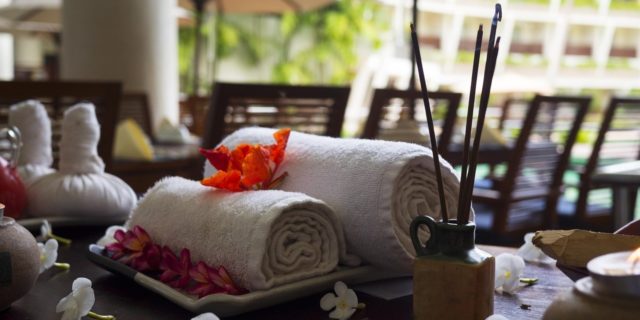
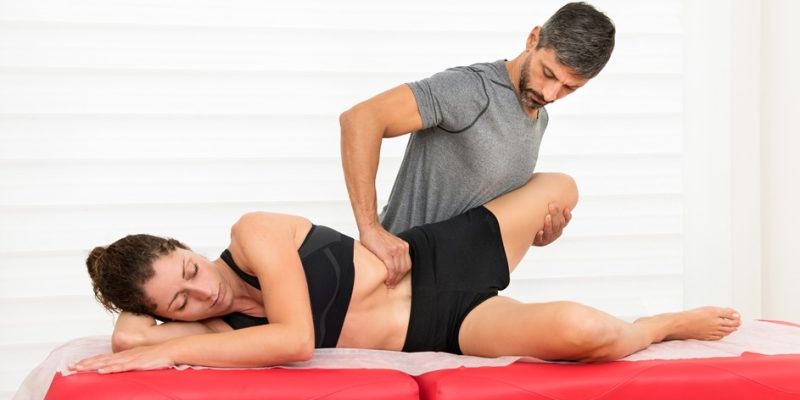
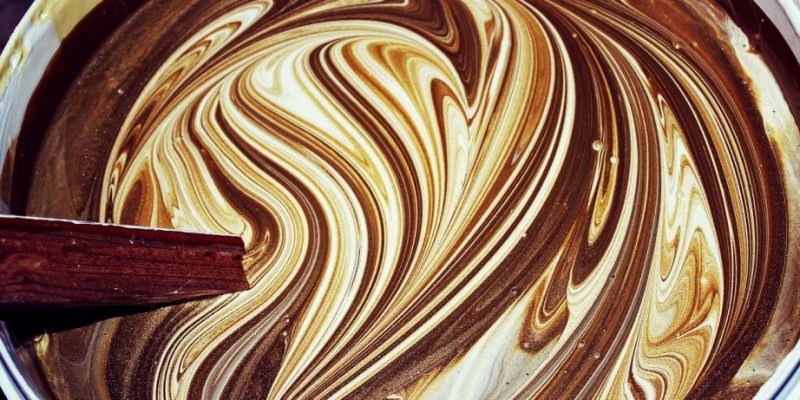
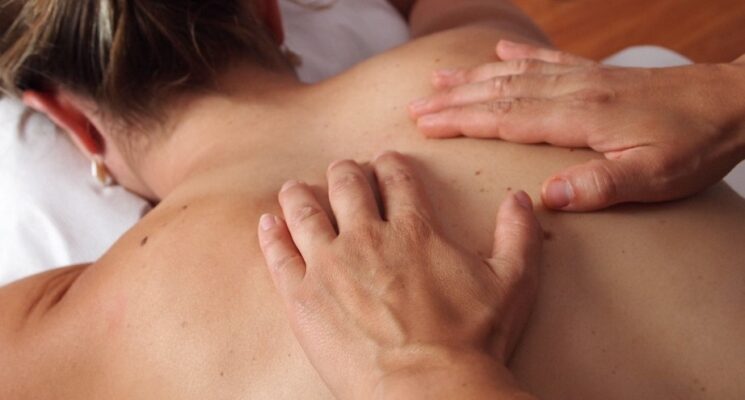
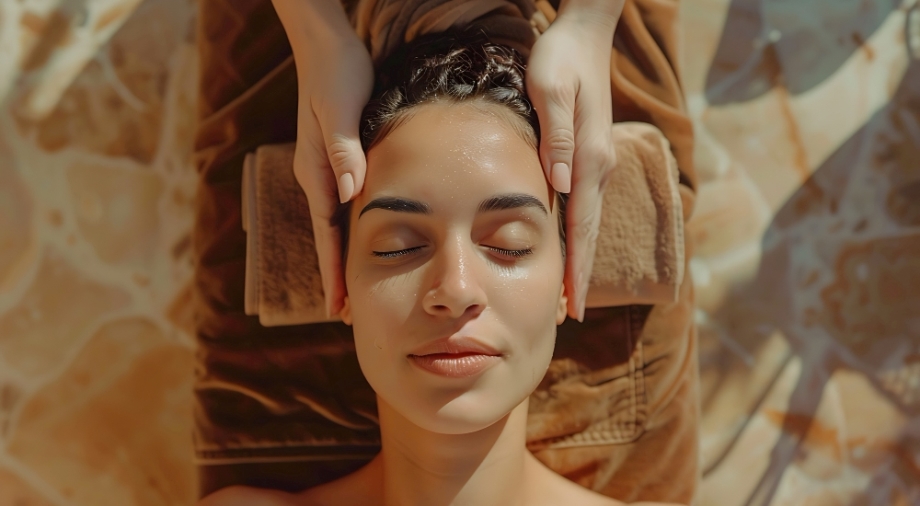
In fact, our “good old” clothed traditional Thai massage sessions on a floor mat, given in a compassionate and meditative fashion, have been revamped into half-naked pampering chocolate mousse Thai stretching on the massage table, relaxing Thai avocado oil aromatherapy, and coconut butter Thai hammering indulgence massage.
 eBook
eBook
Of course, the above is perhaps somewhat of an exaggeration, but what we’ve witnessed in Thailand (and also abroad, for that matter) is the enormous rise of all sorts of “exotic” Thai massage treatments in increasingly luxurious Western style spa-like settings. Additionally, you can buy quick sessions of ten minutes, or alternatively extensive luxury treatments taking four hours, or even an entire weekend packed with twenty treatment modalities.
What actually happened with Thai Massage is that traditional preventive or curative medicine changed for the greater part to relaxation, wellness, beautifying, pampering, and entertainment. Apparently, it’s what people increasingly seek nowadays, and thus: the market asks and the business provides.
Furthermore, the sensual erotic massage industry — which in Thailand rapidly expanded during the Vietnam War due to the American military presence — has exploded. It continues to grow, offering increasingly bizarre treatments that either use Thai Massage as a cover-up for sexual services or even “integrate” Thai massage into these practices.
Nonetheless, it’s not all “bad” what’s going on; for instance, there’s much more information available nowadays and you can more easily find a plethora of high-quality health and therapeutic treatments. Yet, as labels like “health” and “therapy” have become fashionable in recent years, we likewise see a certain commercialization in this field. Today, you’ll find quite a lot of “therapeutic treatments” that are not therapeutic at all, but simply forms of relaxation and pampering.
It needs to be said that the Thai government continually tries and has tried to certify Thai massage therapists by imposing minimum training requirements, and things are improving in mid-range or high-end facilities, but there are many practitioners out there with little or no training or experience who just see an earning opportunity. It’s hard for the government to be very strict in this field because it means employment — tourists ask, the demand is high, and many Thais make a living in the spa and wellness industry.
Thai Massage Training
Within the realm of Thai massage training we see similar developments as within the treatment industry. Not only have Thai massage schools mushroomed since the 1980s, the types of training modalities offered have grown hugely — from Thai Massage to Thai Face Massage to Foot Massage to Thai Aromatherapy and Thai Oil Massage to Thai Bamboo Massage or Thai Shoulder & Neck Massage, well, you name it.
eBook
Apart from that, many training courses are offered with the label “traditional” despite not being traditional at all — or even of Thai origin. The same applies to the term “therapeutic”: most training courses are simply too short to offer any real therapeutic value for clients or patients.
To make my point: from sitting at “the master’s feet” for an indefinite amount of time, we now see training courses of one day, two days, or five days, sometimes even claiming that one will be a fully certified and competent Thai massage practitioner afterwards. A bunch of massage schools have also ventured into the spa and wellness industry offering all kinds of blends of Thai and Western massage and bodywork training modalities, often, in my opinion, with very little study or practice hours, and, moreover, of doubtful value.
But then again, today, there are also very good and in-depth Thai healing arts trainings available, there’s plenty of research going on, information is easier to obtain, top healers and teachers are more accessible, and there’s more knowledge about “what’s what and what’s not.”
eBook
Another development is Thai massage schools offering courses that have professional, accredited value outside of Thailand giving rights to continuing education units in the USA, Canada, or Australia, for instance. Additionally, there’s a whole set of Thai governmental regulations and curricula with regard to Thai traditional medicine and Thai massage training, which depending on the trainers is more or less adhered to making the quality of trainings better, well, in any case … theoretically.
As with the very short courses, they have the advantage that foreign students have a chance to get a taste of Thai Massage (being on vacation they often have no time to take longer courses), and that’s perhaps better than no publicity or promotion at all. As long as massage schools or trainers clearly tell that a training of a few days is only a very superficial introduction, I don’t think much harm is done.
For what it is, Thai Massage, either treatments or training, has become big “spiritual” business in Thailand, with many busy bees attracted by the honey, and anybody who wants a serious treatment or a serious training course needs to do their homework very well before entering the scene.
In fact, there’s plenty of decent info available on the Internet, of course, if one takes the time to dive a bit deeper than only reading articles of “the 5 best spas,” “the 5 best Thai Massage schools” or “the 5 best Thai massage therapies” from bloggers who often really don’t know what they’re talking about and just copy-paste ahead.