
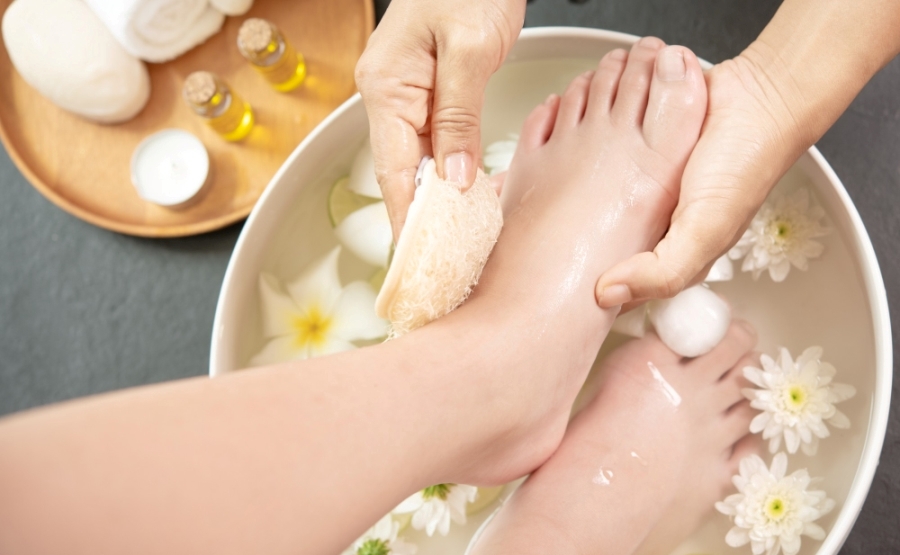
Having a foot bath — also written together as footbath — foot wash, or foot soak, is a common practice, which has been carried out in many different cultures for hundreds if not thousands of years.
 eBook
eBook
Typically, foot baths are refreshing, relaxing, and soothing. In some cases, they offer therapeutic benefits, such as easing muscle tension, joint pain, or general foot discomfort, combating infections and inflammation, or promoting better sleep. Foot baths can be taken at any moment of the day.
You can give yourself a foot bath, or someone else can do it for you. While it can be carried out in a natural body of water (creek, lake, river, etc.), today it’s mostly performed in a tub, large bowl, or spa device filled with cold, lukewarm, or hot water, with the optional addition of herbs, minerals, or medications.
You can also find public foot bath facilities, such as the ashiya, which is a traditional Japanese public foot bath filled with natural geothermal hot spring water. “Ashiya” translates literally to “foot” (ashi) and “hot water” (yu). Moreover, the majority of public foot baths across Japan are free of charge.
There are many reasons why people take foot baths. For instance, they may be taken to remove dirt and microorganisms from the skin and between the toes. If left unwashed, these areas can easily develop infections.
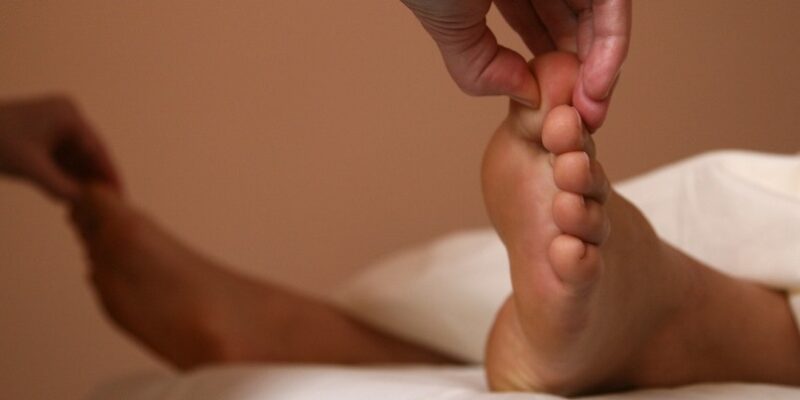
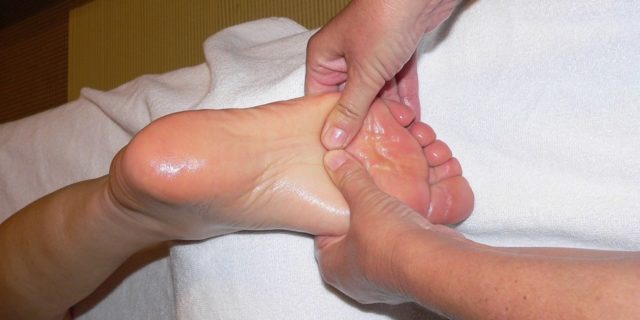
Foot baths can also be applied to eliminate foot odor, soften skin and calluses for easier removal, or prepare the feet for a pedicure. In a pedicure, a soak ensures proper hygiene while softening the nails and cuticles before treatment. Similarly, a foot bath before a foot massage provides cleanliness and helps deeply relax the feet.
eBook
In addition, warm or hot foot baths stimulate overall blood circulation. This is especially beneficial when the feet are cold, or for people who stand all day, lead a sedentary lifestyle, or have restricted mobility. Generally speaking, having warm feet promotes a sense of well-being, whereas having cold feet is universally considered a highly uncomfortable nuisance.
Foot baths also stimulate the numerous nerve endings in the feet, which not only soothes tired feet, but — according to foot reflexology adepts — can also give relief or heal certain discomforts or illnesses that can be treated through reflexology points.
And finally, in some cultures, touching, washing, or massaging the feet of someone else shows deep respect for them, notably for elders or parents. In addition, it can also be part of religious or spiritual ceremonies or rituals.
Mind, however, that although generally beneficial for most people, those who suffer from diabetes, neuropathy, or poor circulatory diseases, should rather abstain from taking foot baths. In fact, in these particular cases, regular foot bathing may cause skin to crack and break down, which increases the risk of perilous bacterial infections.