
Ajarn Pichest Boonthumme was one of the best-known Thai massage teachers in Thailand. In his twenties (during the early 1980s), he began working as a massage teacher at the Old Medicine Hospital in Chiang Mai. He later opened his own massage school and practice, working independently from his home in Hang Dong, a village near Chiang Mai.
 eBook
eBook
Unfortunately, he passed away in 2023, but with about four decades of work, his influence was and still is vast; many contemporary Western Thai massage teachers and styles have been influenced by his approach, methods, and techniques.
Now, this article is not about the type of Thai massage he taught and practiced, but rather about the spiritual aspects connected to Pichest’s life and work.
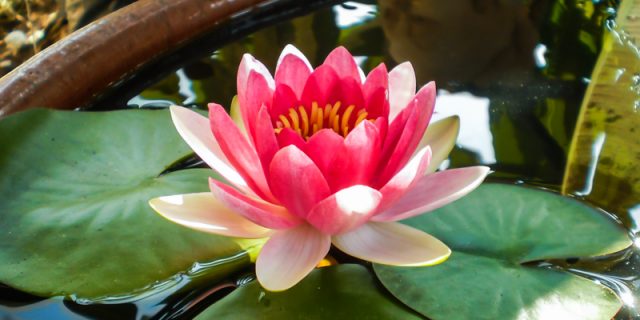
For instance, before a first lesson or session at Pichest’s home, it was customary to bring offerings — such as lotus blossoms, fruit, incense, and candles — for him and his elaborate shrine/altar, which functioned like a mini-temple within the classroom. Established students also frequently brought offerings as a gesture of continued respect.
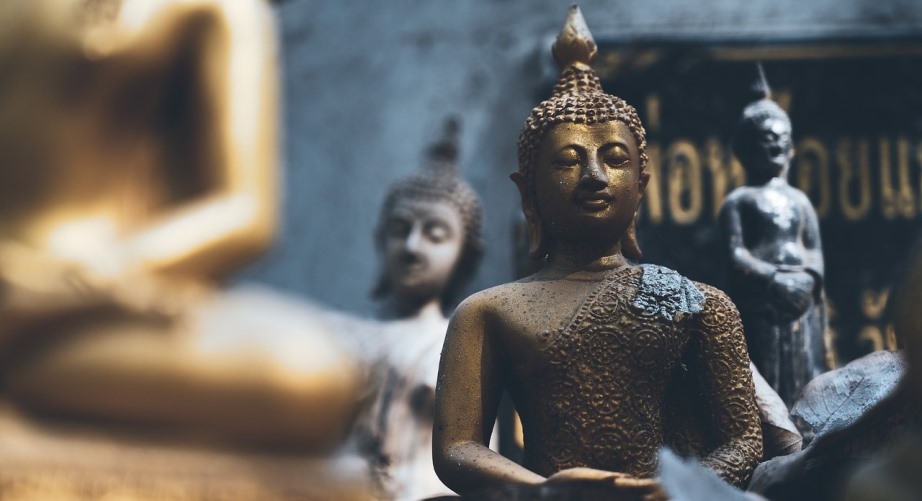
Every morning around 9 a.m., students participated in spiritual rituals — including giving offerings, prayers, recitations, and chants — at the classroom’s central altar. This significant altar was dedicated to the Triple Gem. That is, to the Buddha, the Dhamma (the Buddhist teachings), and the Sangha (the Buddhist community), and to honoring Dr. Shivago (Jivaka), the Father of Thai Medicine.
These activities were entirely in line with the custom to pay respect to the teacher and their lineage, in fact, a Wai Khru to honor the teachers up to the Buddha and Shivago Komarabhacca.
In addition to the “temple,” you would also find a Thai spirit house with offerings, which highlighted the syncretic nature of animism and Buddhism in Thai spirituality.
eBook
In any case, Pichest would subsequently hold so-called “Dhamma talks” or sermons taking about an hour or so, linking physical massage to spiritual and emotional health, expounding on Buddhist precepts, philosophy, and teachings, while likewise discussing and criticizing contemporary developments in Thai society and the world at large.
The lunch Pichest’s wife offered was vegetarian. Although following a vegetarian diet is not a rigid command in many Buddhist lineages — and Pichest himself was not strictly vegetarian — it’s generally encouraged (or, in any case, to eat meat only very moderately), especially for monastics.
Finally, around 4 p.m., following the day’s massage lessons — which were often infused with brief teachings on mindfulness, meditation, and Buddhist philosophy — Ajarn Pichest would lead the afternoon prayers (typically a short invocation to the Buddha and Dr. Shivago) before dismissing the students.
All in all, Pichest’s life and work — regardless of whether one liked the man or his style — served as a superb example of the profound interconnection between Thai massage and spirituality.