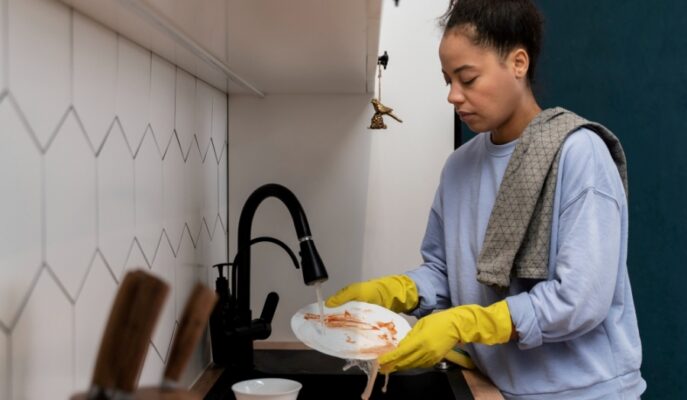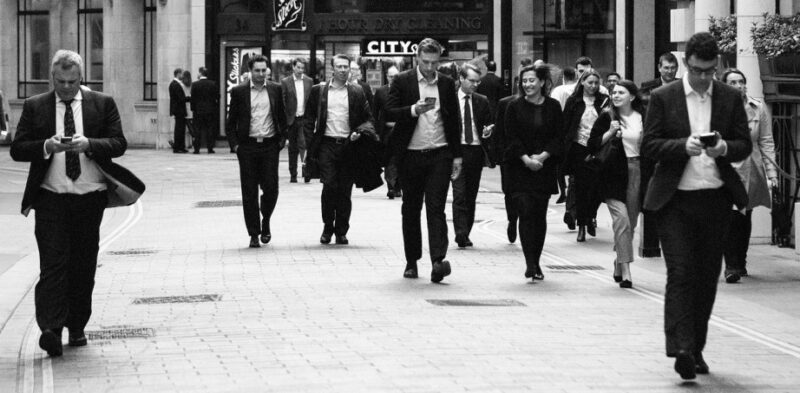

When you’re in a constant hurry, your brain interprets this as an active, physical threat; whether you’re rushing to answer an email, worry about financial survival, hurry through a chore, or walk rapidly, it turns up your sensory system, breathing rhythm, and tenses your body.
Sometimes, you’re not even aware that you’re hurrying. That is, it has become such a normal part of how you go about that you simply forget that you’re spiking yourself.
 eBook

Now, the good news is that your body reflects the act of hurrying through muscular tensions, strenuous postures, and/or shallow, rapid breathing. However, when you notice this and deliberately relax your muscles, posture, and breathing you signal to your brain that “all is safe.” This causes you to instantly stop hurrying, even if it’s only for a little while.
Therefore, it’s good practice to carry out frequent, conscious body scans. Perhaps this sounds complicated or difficult but it really isn’t. It’s just a habit you can easily cultivate, and my own experience is that there comes a moment that you do this rather persistently and effortlessly through a kind of “background monitoring.”
It isn’t that you need to scan your whole body though. There are certain physical zones, including your way of breathing, that are particularly prone to betray hurrying and stress, and those should have your first attention.
So, what needs most attention usually includes the shoulders, neck, head/face, jaw, belly, hands, and breathing. Let’s look at them and see how we can come to instant relaxation.
Your Head
Check your head. Does it feel warm, tensed, or do you experience dizziness, unbalance, or (lighter or stronger) headaches.
Wash your face, neck, and the outside of your ears with room-temperature tap water, or gently press a small towel dampened with room-temperature water onto the affected areas of your head.
You may also gently massage the temples with your index and middle fingers. The temples are the flattened regions on either side of the head, located back of the eyes and forehead, above the cheekbones, and in front of the ears
In addition, you can gently massage the area directly under the base of the skull, just above the neck by using your thumbs.
Are you furrowing your brows? Relax your face and relax your eye gaze.
The Jaw
Check your jaw. Is it clenched? Unclench.
Ensure that your teeth are parted and your tongue rests gently on the roof of your mouth behind your front teeth. This immediately unloads the pressure on your trigeminal and auditory pathways, nerves that interact in the brainstem to integrate touch, face sensation, and sound.
In addition, you can also very gently massage the jawline with your fingers, typically with the index and middle fingers.
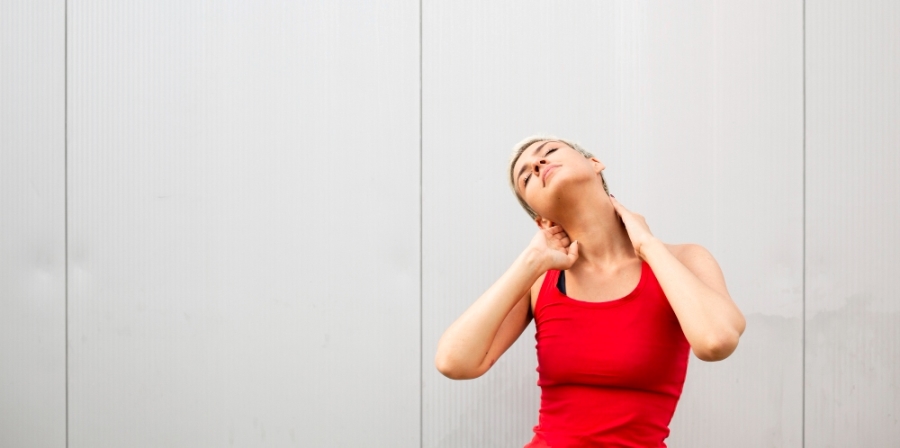
The Shoulders and Neck
Are your shoulders raised? Drop them down and slightly back.
When your shoulders linger near your ears, they compress the accessory nerve (connected to the sternocleidomastoid and trapezius muscles), which directly increases head and neck tension.
Your Belly
When your system is locked in a state of survival and hurry, your brain treats your core like a physical shield. This creates a state of chronic, subconscious abdominal bracing.
In fact, your brain automatically tenses your abdominal muscles to protect your vital internal organs from a physical blow. When you experience long-term hurry and survival stress, your brain orders your core to stay continuously braced.
A tight, braced abdomen physically blocks your diaphragm from dropping down when you breathe. This forces you into rapid and shallow chest breathing creating a vicious feedback loop also keeping your shoulders raised, neck tight, and jaw clenched.
So, check if you’re holding your abdominal area tight. Consciously let your belly relax and move outward. The moment you soften your abdominal wall, your diaphragm can drop. This automatically forces a deep, slow breath without you having to think about it, which signals safety to your brain.
By contrast, you can also perform relaxed, deep, abdominal breathing to relax the belly. It works from both ways.
The Hands
Check if you’re gripping the steering wheel, your phone, a computer mouse, or a kitchen utensil with excessive, unnecessary force. Soften your grip.
Relaxed hands signal a relaxed nervous system.
Your Breathing Pattern
If you notice rapid breathing, gently switch to slow, deep abdominal breathing. Focus only on making the exhale longer than the inhale.
And a final note: when you catch yourself hurrying or tensing up, do not view it as a failure. View it as your cue to practice. Every single time you catch yourself breathing rapidly, having a clenched jaw or raised shoulders, deliberately choose to relax. Over time, this will cultivate calmer neurological activity.