
Hydrotherapy is a treatment modality that uses water at various temperatures, speeds, and pressures to relieve muscle and joint pain, reduce stiffness, relax muscles, and improve range of movement and mobility.
 eBook

In hydrotherapy, water is used in a variety of forms and methods, including the use of hot and cold water, slow or fast streaming water, and the use of pools, springs, creeks, waterfalls, water hoses, soaks, baths, jets, you name it.
Kneipp hydrotherapy, developed by the German Sebastian Kneipp in the 19th century, is a form of hydrotherapy and uses varying temperatures, methods, and pressures, including alternations of hot and cold water to stimulate blood circulation, encourage metabolism, and improve the immune system.
In fact, one of the primary ideas behind this therapy is the use of rapid alternating temperatures, which works like an exercise for the blood vessels, stimulates lymphatic drainage, and triggers an anti-inflammatory response. That is, heat i.e., warm water expands the blood vessels and relaxes the muscles, while cold water contracts the blood vessels, forcing blood back toward the organs.
There are many different types of holistic Kneipp applications for the body, but in the context of barefoot treatments and therapies, the following are of interest:
Kneipp Walk (Kneipp Path)
In this treatment, you walk barefoot through alternating pools of warm and ice-cold water. In addition, you would step over smooth pebbles, which stimulate acupressure points i.e., reflex points on the soles of your feet.
Water Treading (Wassertreten)
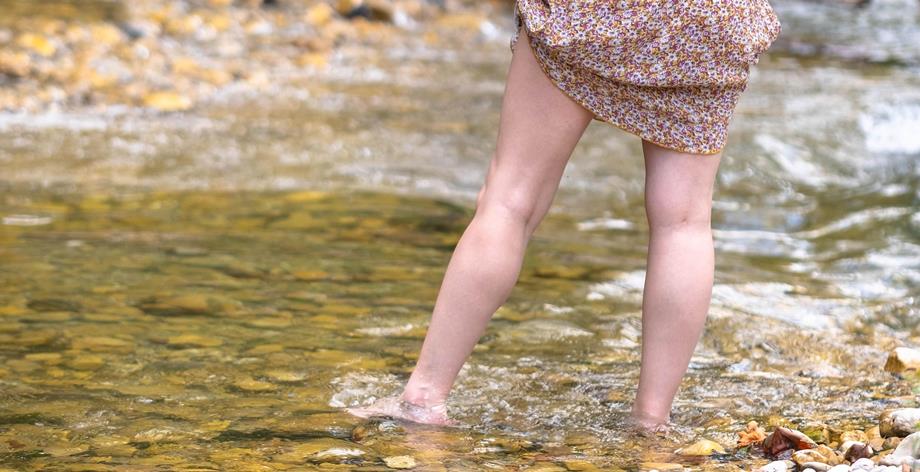
Here, you would walk barefoot through knee-high cold water, lifting one foot completely out of the water with every step to let the air pass the skin before stepping back down.
Dew Walking
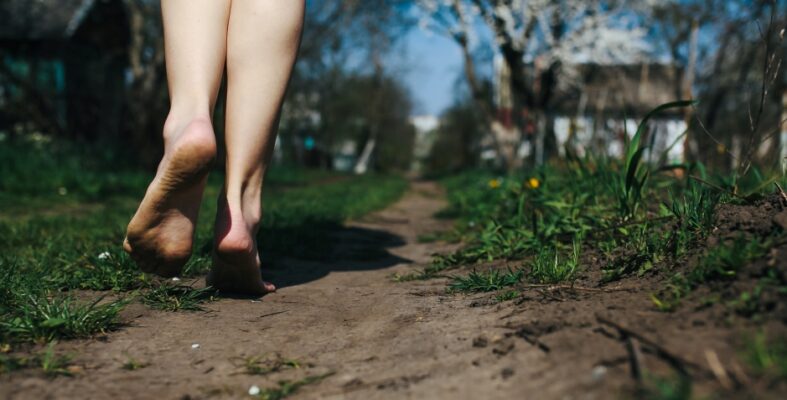
This is Kneipp’s original treatment. It involves barefoot walking through cold morning dew on wet grass to stimulate the body early in the day.
Snow Walking
In this treatment, which uses a somewhat harsher method, one walks barefoot through snow.