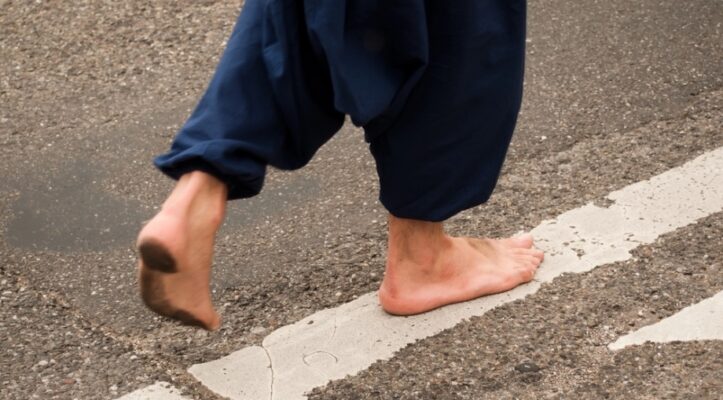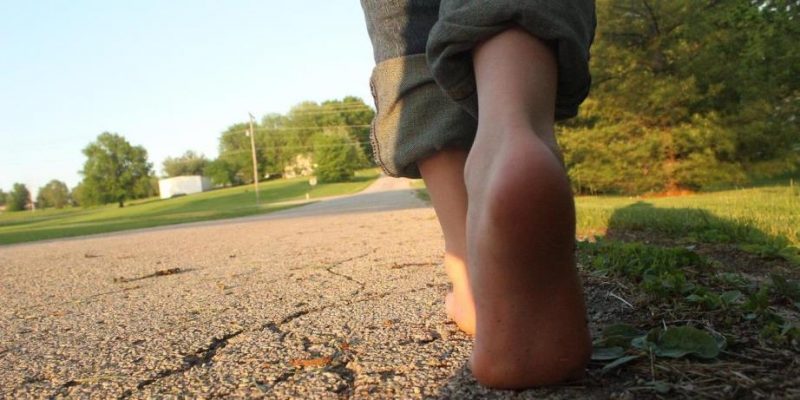


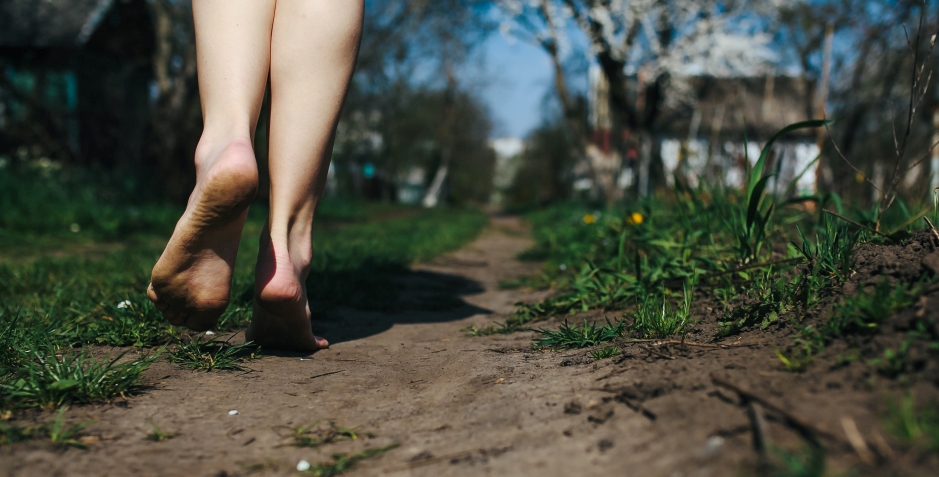
Barefoot walking can be part of a deliberate barefoot lifestyle, but it can also be a natural part of daily life.
It’s thought that walking barefoot can have several health benefits when compared to walking with shoes i.e., footwear. For instance, it may result in a more natural, flexible gait, promotes naturally, free formed, healthier, and stronger feet not being pressed or constricted, and avoids strong impact on the ground, which protects feet, ankles, and knees. The latter may sound contradictory, but when walking barefoot, one tends to land on the forefoot rather than on the heel.
 eBook
eBook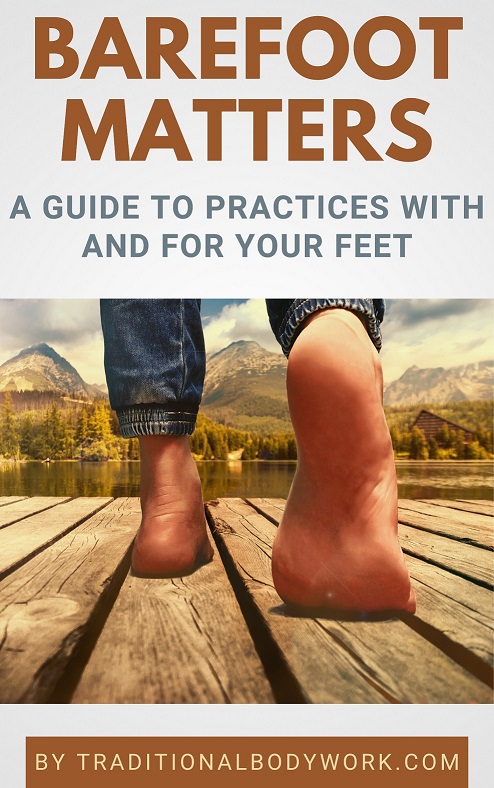
In addition, research suggests that barefoot walking lowers risk of osteoarthritis, so-called “flat feet,” calluses, corns, deformities, and foot or ankle pains.
Apart from the physical benefits, there are researchers, therapists, and laymen who believe that direct contact with the Earth is likewise beneficial for one’s overall emotional and mental health due to the direct energetic and electromagnetic exchange. This is a practice known as earthing or grounding.
However, there are some risks attached to walking barefoot. As footwear offers protection for the feet, the bare feet are more prone to suffer from perforations by glass, nails, screws, stones, or thorns. In addition, scratches, bruises, cuts, burns, electrical shock, and frostbite can happen more easily than when using footwear. Another issue is that parasites, little animals, fungi, or bacteria can more readily enter the body, for instance, when there are cuts, bruises, or wounds of the bare feet.
The paradox is that research has likewise shown that barefoot walkers have a lower chance of contracting athlete’s foot. This fungal infection spreads when fungi come into contact with feet that are weakened, moist, and covered by shoes. However, open shoes like flip-flops or sandals can significantly reduce this risk.
eBook
Although going barefoot has health benefits, it needs caution when you have always used shoes. In fact, if the feet are not used to barefoot walking, it can cause issues such as calf pain, blisters, Achilles tendinitis, or plantar fasciitis, simply because of underdeveloped feet.
This means that you need to build things up gradually, first walking barefoot for only short periods instead of going barefoot all the time right away. In addition, regular barefoot walking is not advised for those with diabetes.
In fact, people with diabetes should absolutely not go barefoot because nerve damage prevents them from feeling minor cuts or punctures, while poor blood flow hinders healing. This combination causes unnoticed injuries to quickly develop into severe infections and open sores that can ultimately even lead to amputation.