

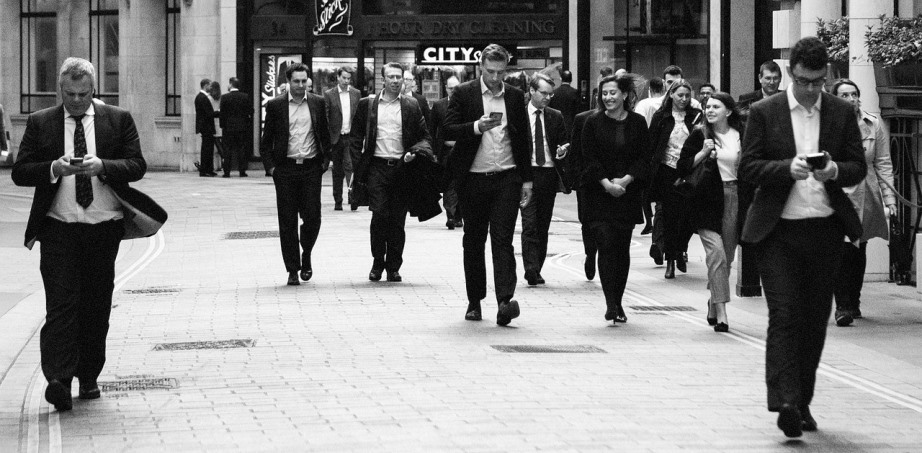
Modern, global society is rapidly accelerating, mainly speeding up three domains: technological advancement, our pace of life, and cultural change. It’s a systemic, ongoing acceleration having a direct relationship with hurrying, chronic stress, and persistent anxiety.
Technology makes that we can travel faster and relocate more quickly to other places, which actually makes us do more instead of less. The same counts for the progression in digital communication, which results in instant contact with others, both around the clock and the globe, creating expectations that human responses and work processes should match this speed.
 eBook
eBook
In addition, the internet with its abundance of social networking platforms, AI immediacy, and online shopping options has created “instant gratification,” which has made normal waiting times feel undesirable, uncomfortable, and nerve-wracking.
Therefore, while modern technology is actually designed to save us time and provide us with more leisure, it paradoxically increases workloads and expectations keeping us firmly in the fast lane of an “always-on” society.
On a cultural level, a so-called “successful life” is driven and defined by acceleration. For instance, one of the characteristics is that modern culture tends to “rate” a successful life by the volume of experiences accumulated. More is better, and we feel that we need to do a large quantity of things in our life, like seeing every country, trying every type of food, watching every trendy series, and joining the latest fitness trend, all driven by the infamous Fear Of Missing Out (FOMO).
It also means that “time is money,” a valuable and finite resource that shouldn’t be wasted; that is, you either use time to earn money or to “accomplish” things. This also reflects on our relationships; people and situations are often viewed through a lens of convenience or commodity and serve to reach our fast-paced goals rather than as an emotional investment in lifelong commitment. And, if something or someone stops benefitting us directly, we tend to quickly “move on.”
eBook
On another level, resting, contemplating, daydreaming, or doing nothing is often labeled as being lazy and unproductive. Society dictates that one must be active, busy, and show a strong work ethic, which triggers feelings of anxiety and guilt during moments of idleness. Today, identity is based on what you have done, how much you have achieved, and how fast you accomplished it. Furthermore, without constant “self-improvement and optimization,” you risk becoming obsolete.
All in all, global acceleration feeds a continuous internal urge to live, move, function, perform at a hyper-fast pace, even when there is actually no objective need to rush.
Ultimately, it traps people in a feedback loop: the faster society moves, the more hurried we feel; the more hurried we feel, the more our anxiety and restlessness increase, finally reducing the physical resilience and mental capacity we need to cope with a continuously accelerating world.