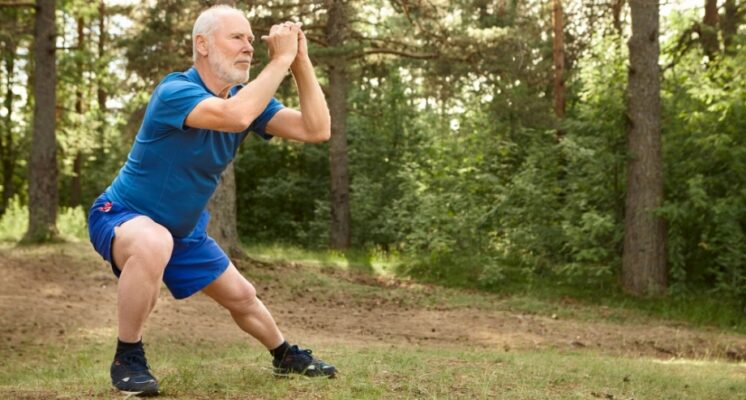

Yoga exercises i.e., yoga poses (asanas) can help manage, alleviate, or prevent prostate issues.
 eBook | Click for details
For instance, certain yoga poses can help prevent benign prostatic hyperplasia (BPH i.e., an enlarged prostate) or help improve BPH symptoms.
Yoga poses can also strengthen pelvic floor muscles and — conversely — also reduce pelvic tensions, making it easier, for instance, to achieve increased bladder control or ejaculation control.
Yoga may also help to reduce stress, and as stress is thought to worsen symptoms of BPH, yoga can be a means to manage BPH.
Many yoga poses may improve pelvic floor, abdominal, and prostate health. Here below, you’ll find just a small selection of poses that are thought to be beneficial:
Cobbler’s Pose (Baddha Konasana)
This is a pose in seated position that may help release general pelvic tension.
Bridge Pose (Setu Bandhasana)
This pose is done lying on the floor and directly strengthens muscles around the prostate.
Hero Pose (Virasana)
A pose done in seated position that may help release pelvic tension around the prostate.
Reclining Hand-to-Big-Toe Pose (Supta Padangusthasana)
This pose is done lying-down, and is a leg-extension pose that can strengthen the pelvic floor and release pelvic tension.
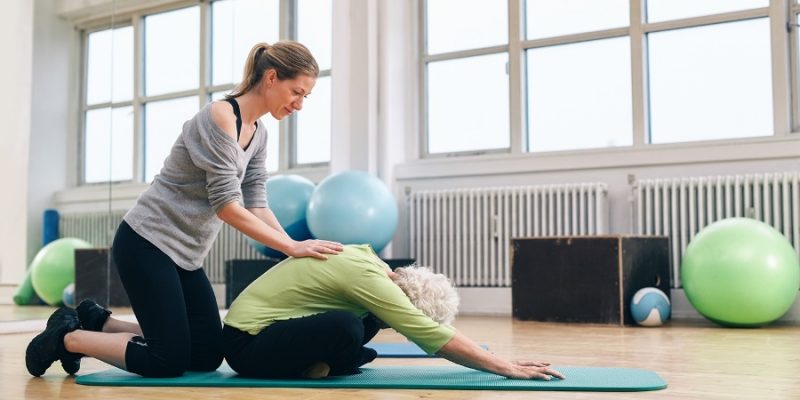
Child’s Pose (Balasana)
This pose is done kneeling while extending the spine and breathing diaphragmatically. This pose may help reduce anxiety and improves circulation in the abdominal and pelvic organs.
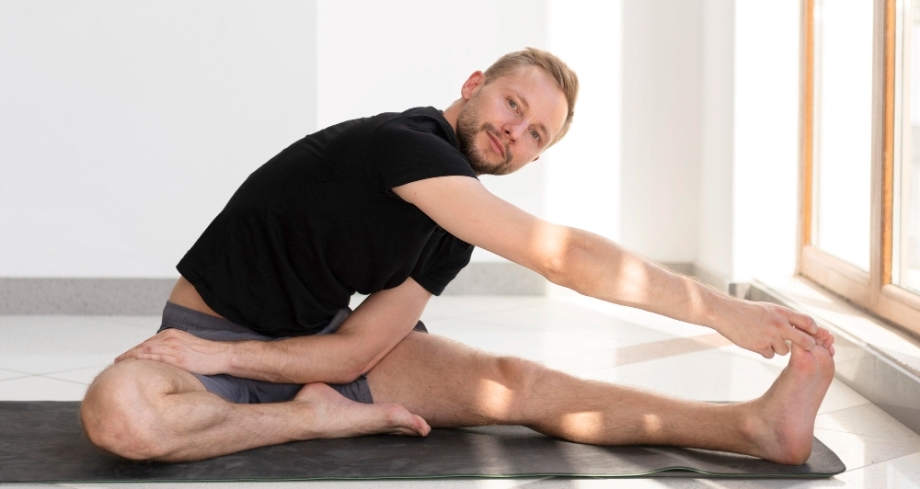
Head-to-Knee Forward Bend (Janu Sirsasana)
This is a seated, forward-bend pose that aims at stretching one leg. Reduces pelvic tension, improves abdominal strength, and may increase blood flow to the prostate and helps detoxify it.
Bow Pose (Dhanurasana)
This yoga pose is done lying on the front of the body while reaching the arms back towards the feet. This pose may strengthen the abdomen, pelvic floor, and lower back.
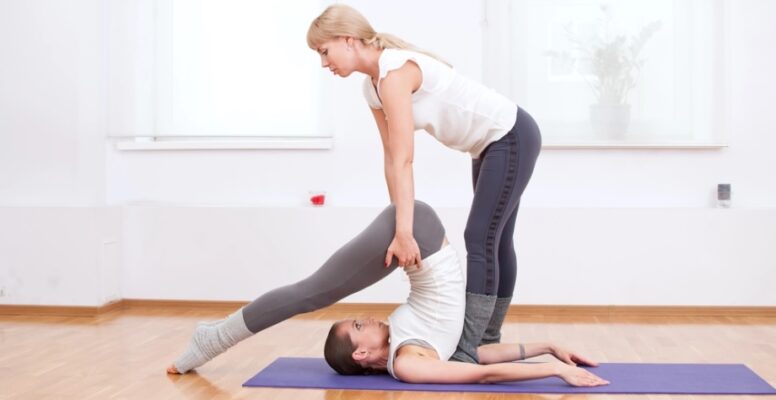
Shoulder Stand (Viparita Karani Mudra)
By inverting the body, the pose promotes the return of venous blood that often pools in the pelvic region and legs. This drainage helps reduce pelvic congestion and brings fresh, oxygenated blood to the prostate gland. The pose can also relieve the physical pressure an enlarged prostate (BPH) might place on the bladder.