

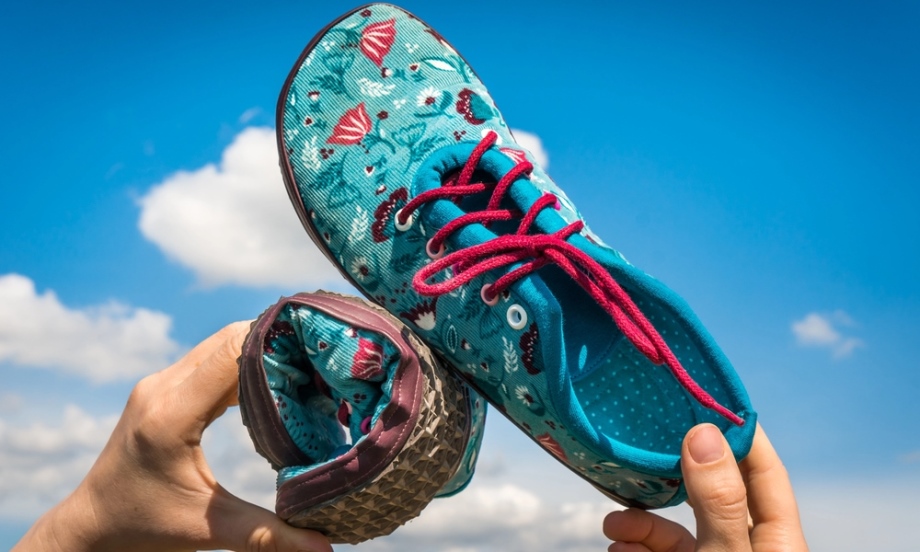
Barefoot footwear is a type of shoe that mimics walking or running barefoot; they are also called minimalist shoes, barefoot shoes, or barefoot socks.
They are different from “normal” shoes in that they have minimal cushioning, offer little support and structure, are light, and have a wide area for the toes to move freely (or alternatively have “toes,” designed like the fingers in a glove). They also feature a thin, flexible, and even sole to really feel the ground you’re walking (or running) on.
 eBook | Click for details
The goal and health benefits of wearing them are to reconnect the feet with the ground, allow the feet to move naturally instead of being compressed, strengthen muscles, and improve natural biomechanics, arch function, balance, posture, and ankle and foot strength.
They differ from traditional shoes in that the latter often have thick soles, arch support, and a heel-to-toe drop cushion (with the heel being higher than the toe). This gives less direct contact with the ground and, moreover, may deform and weaken foot muscles over time, while influencing one’s natural balance and posture negatively.
Mind that flip-flops have some characteristics that would qualify for being barefoot footwear (such as being flat and having a wide area for the toes), however, the difference is that they have no secure attachment to the foot.
When wearing flip-flops, the toes tend to “grab” or scrunch with every step to avoid sliding off. The effect is that it can change your natural way of walking, while also potentially leading to issues with the joints and tendons. In addition, the sole of flip-flops is often much thicker than actual barefoot shoes, which results in less ground feel.
However, using barefoot footwear has not only health benefits. In fact, there are also certain risks involved wearing them.
For instance, it’s important to do a gradual transition to using barefoot footwear to allow the feet and lower legs to adapt. Switching entirely and too quickly may cause discomforts or injury. In addition, those who suffer from certain foot conditions (for instance, severe flat feet), nerve issues, or diabetes should always first consult an appropriate healthcare provider before starting the switch.
eBook | Click for details
But there are also other risks. For instance, because of the thin soles, the feet are less protected against glass, nails, metal debris, or other sharp objects on the ground. This becomes even riskier when running because there is less time to anticipate your next step, increasing the chance of stepping on hazardous objects.
Risks also include that thin soles make for increased impact forces when walking or running, which can cause tiny fractures of the foot and ankle bones; a lack of arch support can overstretch and inflame the plantar fascia, leading to chronic heel pain; and poor insulation increases the risk of burns on hot pavement or frostbite in freezing conditions.
Therefore, it’s advised to take the above-mentioned issues into account and either not switch to using barefoot footwear or make a gradual switch and meticulously monitor the impact on your body.