

Tension and pain are two different sensations, but nonetheless closely related. That is, tension can cause pain, and pain can cause tension.
In addition, tension can be experienced as pain, and pain can be experienced as tension. The reason for this is that although pain is considered an objective sensation, it’s mixed with subjective perceptions. What’s pain for one person is just “some tension” for another, and vice versa.
 eBook | Click for details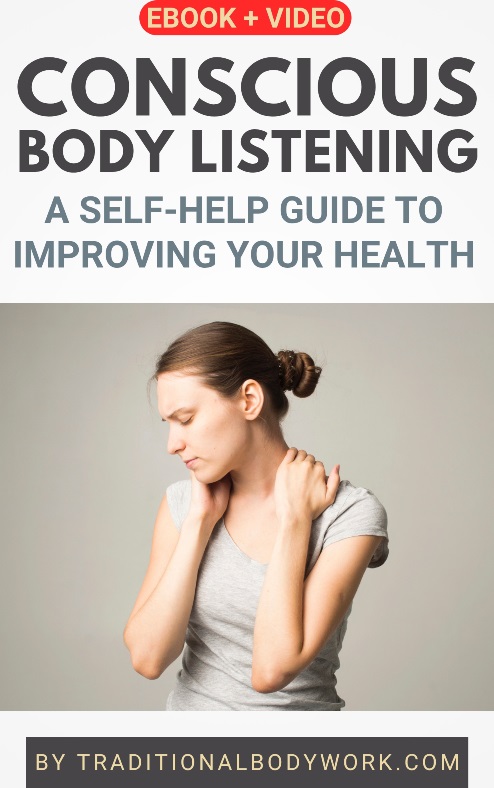
For instance, some people experience stretching as pain because it puts strain on the muscles and tendons and feels “threatening,” and others experience it as a “specific sensation” or even find it a pleasant feeling.
Likewise, everybody has different pain thresholds (the point at which a sensation is first perceived as painful), which depend on a person’s genetics, age, constitution, hormonal issues, environmental and psychological factors, among other factors.
Having said that, let’s look at the common definitions of pain and tension. Now, bodily pain is a physical sensation that can be experienced as either sharp, aching, throbbing, or burning, while tension is typically related to a feeling of muscle tightness or stiffness.
Pain usually signals an injury or structural health problem, while tension is rather a temporary sensation caused by stress, anxiety, inappropriate posture, underuse or overuse of the body or body parts.
eBook | Click for details
As said already, tension can cause pain or can be experienced as pain. For instance, very tight neck muscles can cause pain in the neck — by itself or when moving the neck — and in addition, it can cause headaches due to nerve irritations or pulls on the scalp.
Pain can also cause tensions. For instance, pain in the knee would typically tighten the calf and thigh muscles in order to avoid sudden movements of the knee that could aggravate the pain. This is a type of body compensation, which, in the long run, can cause other issues, including excessive muscle tensions.
Now, whatever you experience — either tensions or pains — these sensations are incredibly important in conscious body listening. In fact, it’s one of the red threads of the practice, and both asking after and listening for bodily pains and tensions is an active element of body exploration, body attunement, and resolving health issues.