


Whether you’re in action or not, you are always either sitting, lying down, or standing — and there’s always some kind of posture involved.
 eBook | Click for details
Typically, your various postures will be habitual. For instance, when you stand and wait for someone or something, you may lean on your right leg or your left, or perhaps you are evenly leaning on both.
Your arms may be hanging alongside your body, to the back, or crossed before your chest, or perhaps you are resting with your hands on your hips, and so on.
In addition, you may be slouching (shoulders hanging forward and head and neck bent slightly over), your shoulders may be lifted, or perhaps you stand energetically upward and straight.
In the context of body listening — i.e. conscious body awareness — it’s important to actively pay attention to your postures in different situations: when you eat, wait for someone, shower, pee or poop, sit on a chair, couch, or bench, work behind the computer, are lying down watching television, etc.
You can also check on different postures in a mirror — for instance, how you would stand or sit — which can be a good help to see how different body parts assume their position in relation to each other.
eBook | Click for details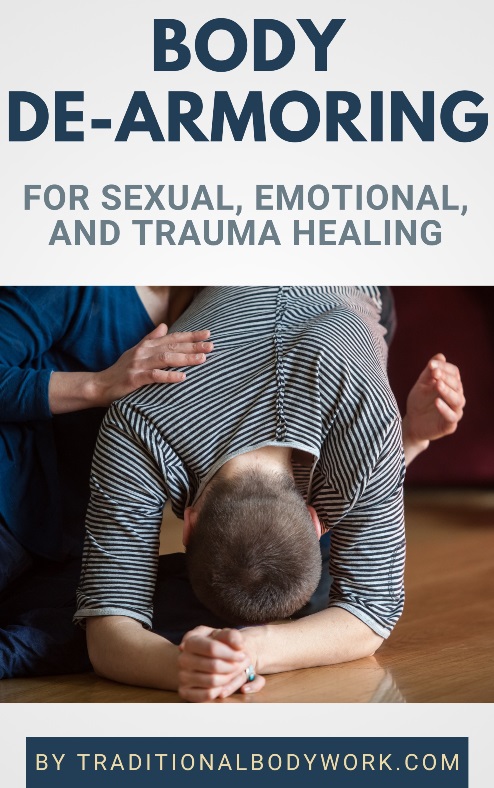
You may also notice that your posture changes depending on specific circumstances. For example, it will likely be different during a job interview, in the dentist’s waiting room, while sitting on a public bus, when you are alone in the comfort of your home, or when you are among friends.
Explore your postures by applying the three questions: What am I doing, What do I sense, and Can I do it differently?
You might discover that you adopt a specific posture out of habit or to compensate for certain tensions or pains. You may also find that assuming a different posture is more efficient and balanced, helping to relieve possible discomfort and improve your mood.