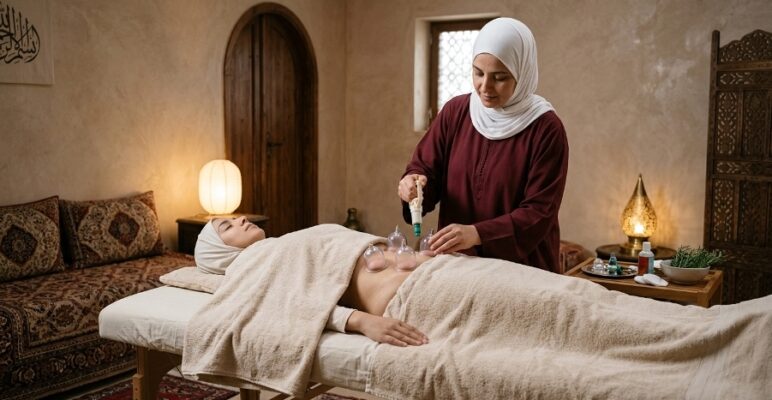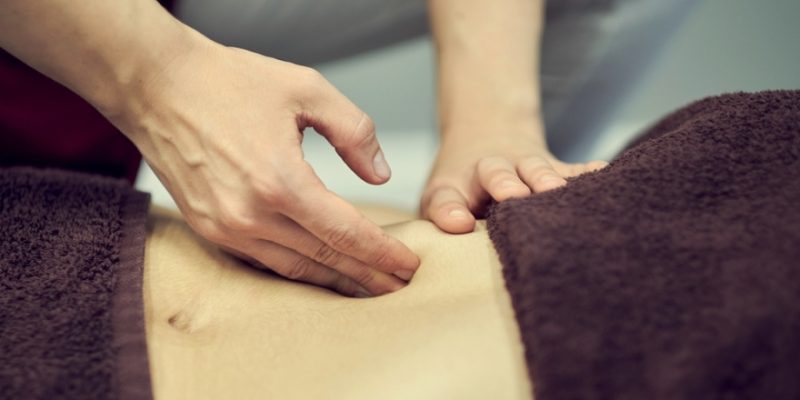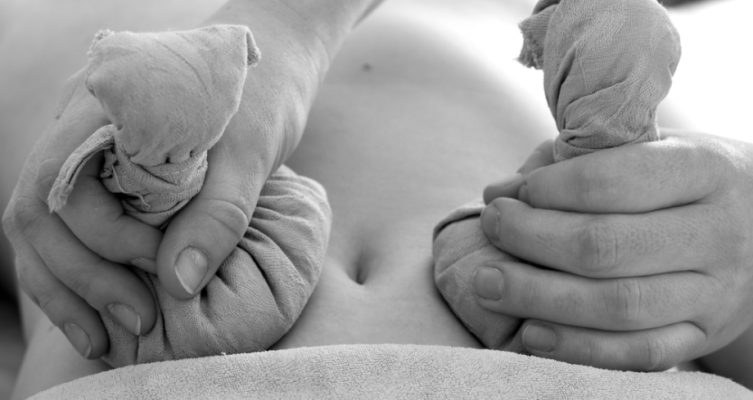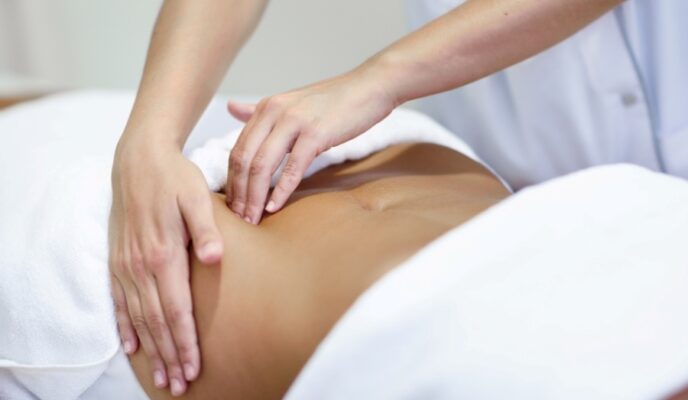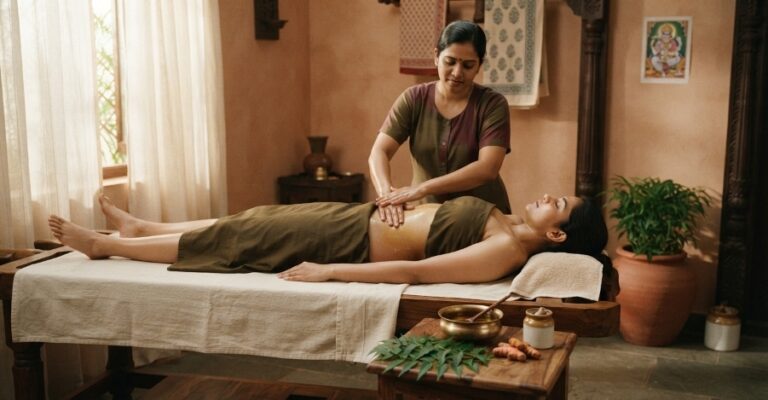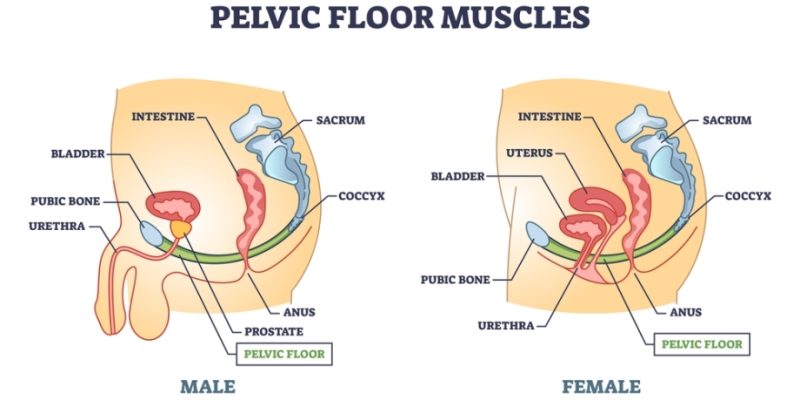

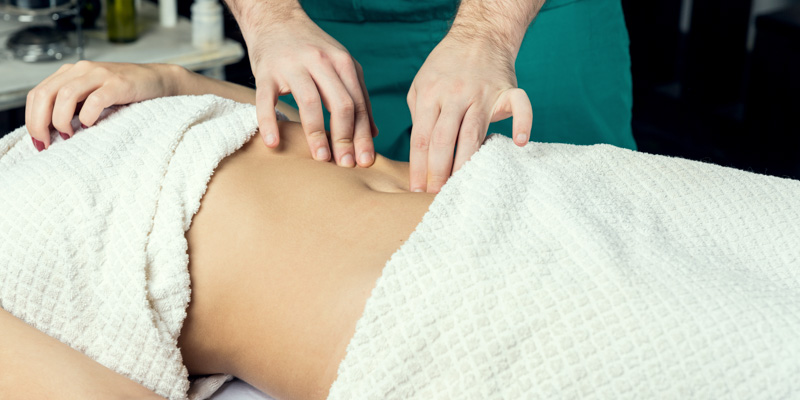
Abdominal massage typically uses general massage techniques to work with, on, or within the abdominopelvic area. Think of sustained pressure, acupressure, rubbing, strokes, friction, traction, and stretches.
However, there are also very specific techniques, used for targeted massage to resolve particular health issues originating in the abdominal or pelvic area. Let’s look at some of those:
Table of contents:
- Abdominal Skin Rolling
- Abdominal Wall Recoil Technique
- Abdominal Wringing and Squeezing
- Chapman Technique
- Psoas and Iliacus Release
- Abdominal Manual Lymphatic Massage (AMLD)
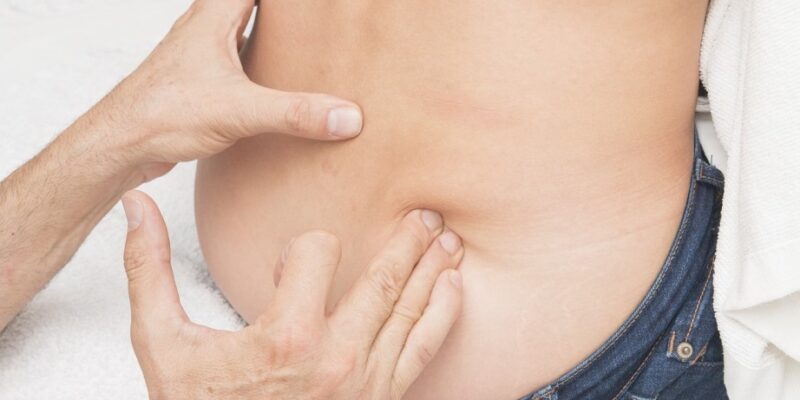
Abdominal Skin Rolling
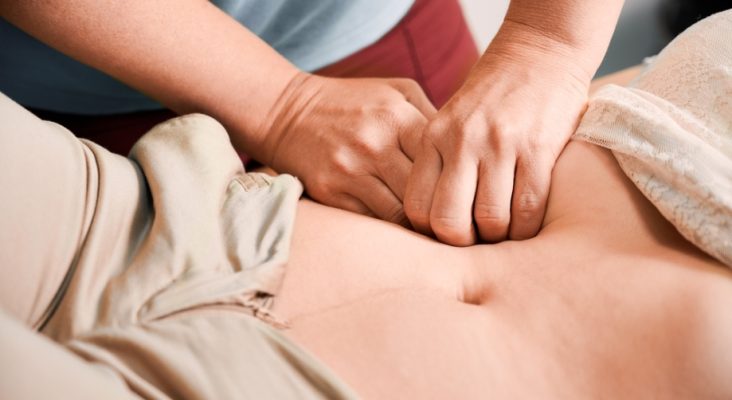
Abdominal skin rolling is a manual technique where a fold of skin and subcutaneous fat (the layer of fat directly underneath the skin) is pinched between the thumbs and fingers, and subsequently rolled across the abdominal wall without losing contact.
Abdominal skin rolling is typically used to address subcutaneous fascial restrictions, muscle tightness, and metabolic function.
The effect of skin rolling is that it increases the temperature of muscles and fascia and helps them to stretch, loosen, and break up adhesions and scar tissue to relieve tightness and restriction. By reducing tightness and restriction, the technique also helps to reduce muscular pains.
Abdominal Wall Recoil Technique
Abdominal wall recoil or abdominal wall springing is a therapeutic osteopathic technique.
 eBook
The practitioner applies firm but gentle compression with the flat hands to the abdominal wall until tension or resistance is felt.
The practitioner then applies a very quick, high-speed push directly against that restriction to subsequently abruptly release the pressure.
This rapid change in intra-abdominal pressure promotes blood flow, helps release restrictive fascial or postoperative adhesions, stimulates local neurological reflexes, and supports in moving stagnant fluids out of deep pelvic spaces.
This technique is typically used as an alternative to deep, prolonged pressure, notably when the abdomen is hypersensitive, painful, or restricted by scarring or adhesions.
In addition, it’s used to resolve severe abdominal bloating, chronic constipation, irritable bowel syndrome (IBS), chronic acid reflux, or hiatal hernia symptoms.
Abdominal Wringing and Squeezing
Abdominal wringing and squeezing is a deep soft-tissue massage technique where the hands are placed on opposite sides of the waist.
The therapist then slowly moves the hands in opposite directions, squeezes, kneads, and compresses the oblique muscles and lateral fat pads.
The technique helps to relax and stretch the muscles within the abdomen, waist, and hip borders, thereby relieving muscle tightness, tension, and stress.
Chapman Technique
The Chapman technique for the abdomen — developed by Frank Chapman, in the 1920s — is an osteopathic manual therapy that focuses on specific “neuro-lymphatic reflex locations” called Chapman reflex points.
The core idea is that internal organ irritations or inflammations cause a viscera-somatic reflex. This reflex manifests as localized lymphatic stagnation and myofascial congestion, which feel like small, discrete, tender, rubbery nodules deep in the fascia. These reflex points correspond directly to abdominal and pelvic organs.
The technique itself involves using light to deep, rotary finger pressure directly on these points. The finger is rotated continuously for fifteen to thirteen seconds on a reflex point until the nodule softens and tenderness decreases. It’s thought that by doing so, an overactive autonomic nervous system calms down, lymphatic drainage is improved, and somatic pains alleviated.
Psoas and Iliacus Release
When the psoas and iliacus muscles get chronically tight — for instance due to sitting all day, running, or cycling — they pull the pelvis forward into an unnatural tilt.
eBook
The psoas and iliacus are the primary hip flexors that connect the lower spine and pelvis to the thighbone. They sit deep inside the abdominal and pelvic cavities, and release involves applying precise, sustained pressure directly to these deep tissues to break up muscular knots and reset chronic tension.
Hence, psoas and iliacus release is aimed for relaxing the iliopsoas muscle group. The treatment can be performed manually by a physical therapist or chiropractor, or it can be done at home using specialized self-release tools.
Release offers several health benefits:
• Eliminates lower back pain
A tight psoas pulls directly on your lumbar vertebrae, creating constant tension and compression in the lower back.
• Improves hip mobility
It restores full range of motion, allowing the hips to extend fully when walking or running.
• Relieves digestive pressure
The iliacus and psoas are located directly behind the intestines. Severe tension or trigger points can press against the digestive organs, mimicking bloating, gas, or a slow-moving bowel.
Abdominal Manual Lymphatic Massage (AMLD)
MLD is an abbreviation for Manual Lymphatic Drainage, which is a gentle technique used to stimulate the flow of lymph fluid through the body.
A treatment specialization is Abdominal Manual Lymphatic Drainage (AMLD) that focuses on stimulating lymph fluid movement in the abdominal and pelvic region.
The treatment applies light, rhythmic, and circular hand movements with the hand palms and/or fingertips, and stretches the skin lightly to affect superficial lymph vessels. The idea is to direct stagnant fluid away from the abdomen toward active lymph nodes, such as those located in the pelvic area and groin.
The health benefits of AMLD include reduction of swelling and bruising after abdominoplasty and liposuction, relief of abdominal bloating, tension, and fluid retention, improvement of digestive health, waste removal, detoxification, and management of chronic swelling conditions in the pelvic or lower body regions.