
There is a particular kind of tiredness that sleep does not cure. It arrives at the end of the day, when the work is nominally over and the evening is nominally free, and yet nothing inside has truly stopped. The shoulders stay a fraction too high. The jaw holds itself a little too firmly. The mind, told it may now rest, simply changes the subject and keeps running.
And then — the same person lies down on a massage table, and within the hour something happens that a week of “trying to relax” could not manage. The breathing deepens without being asked. The thoughts arrive further apart. The body, at last, believes it is allowed to stop. It is worth asking why a pair of hands succeeds where all the will in the world fails.
Rest is not decided. It is persuaded.
The modern assumption is that relaxation is a choice — that a person can pour a drink, sit down and decide to switch off. But the deepest layer of the nervous system does not take instructions. It takes evidence.
Beneath conscious thought, the body moves between two great tides. One is readiness: the heart quickened, the senses sharpened, the whole organism braced for whatever might come. The other is repair, where the breath lengthens, the tissues mend and the mind falls quiet. Human beings are built to move between them — to rise for a threat and then, when it passes, to sink back into rest.
The trouble is that the modern threat never quite passes. The inbox refills. The screen glows again. And so the tide is never permitted to turn. The body waits, faithfully, for a signal of safety that the world keeps forgetting to send. Massage is one of the very few things that delivers that signal directly — not to the reasoning mind, which cannot be argued into calm, but to the body itself, in the only language it has ever fully trusted.
What a life on alert quietly costs
Vigilance was designed to be brief. Sustained for weeks and months, it charges interest. It shows first in small things: sleep that skims the surface and never dives, a temper with a shorter fuse than the person remembers having, desire that goes strangely quiet. There is the flatness of mid-afternoon and the low dread of a Sunday evening, familiar enough now to pass for personality rather than symptom.
Left long enough, a mood becomes a physiology — a heart that works too hard at rest, a digestion that no longer trusts its meals, a back that aches for no reason a scan can find. “Just stress,” people say, and the phrase carries far more than it should. Much of what is written off as stress is simply a body that has forgotten what its own ease feels like.
What happens under the hands
Consider what a good massage actually does, beneath the pleasant surface of it.
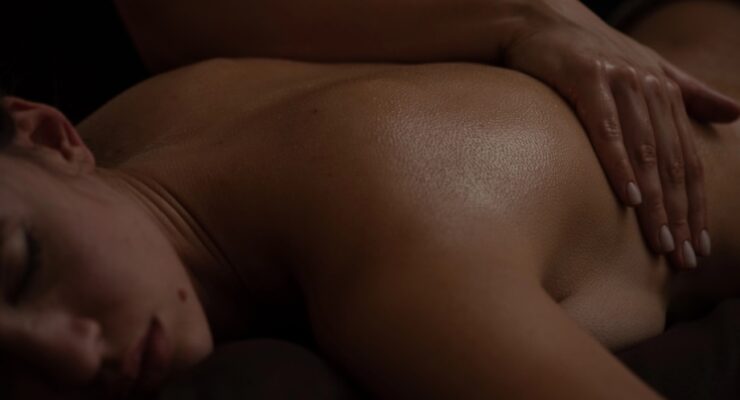
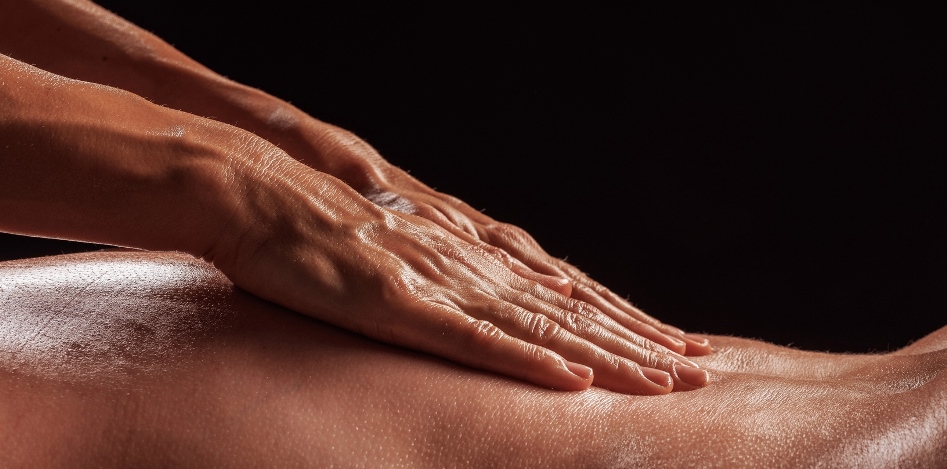
The skin is threaded with a particular class of nerve fibres that answer only to slow, gentle contact — not to a slap or a tap, but to the unhurried stroke of a warm hand. They do not report to the parts of the brain that calculate and worry. They report to the regions that govern emotion and calm. Long, steady pressure along a muscle tells the nervous system, in terms older than language, that no enemy is present; nobody is stroked gently in the middle of a crisis.
The body answers in chemistry. Cortisol, the hormone of alarm, begins to fall. Oxytocin — the hormone of trust, of closeness, of being held — begins to rise. The heart slows. The breath, which had been living in the upper chest, drops back into the belly where it belongs. The tide turns, and it turns not because the person decided it should but because the evidence finally arrived.
Anyone who has lain on a table will recognise the sequence. For the first ten minutes the mind still races, half-composing an email. Then the breathing changes on its own. Then the thoughts thin out, arriving further and further apart, until there is a particular weightless quiet that people struggle to describe and never forget. That quiet is not the absence of thought. It is the body, convinced at last, standing down.
Not all massage speaks the same language
It is a mistake to treat massage as a single thing. Different forms address different layers of a person, and knowing the difference is the whole art of choosing well.
Deep tissue work speaks to the muscle. It finds the knot the desk left behind and works it loose with slow, sustained pressure — the right instrument for a body that has been sitting too long or training too hard. It is honest, mechanical and, for the right complaint, unmatched.
But much of what people carry is not in the muscle at all. It is the residue of a mind that has not been quiet in months — and that tension answers to something slower and more complete. The gentler, more sensual forms of massage work by a different principle: full, unhurried contact, warmth, and the rare experience of being attended to with no goal but one’s own ease. Nothing is being fixed. Nothing is required. The nervous system, which reads every one of those conditions as safety, lets go more completely than pressure alone could ever persuade it to. It is why some people find that a proper sensual massage releases the kind of psychological tension that neither conversation nor exertion nor the firmest deep-tissue work quite dissolves — the body, addressed slowly and wholly, is finally given the evidence it has been waiting for.
The choice, then, is not between a good massage and a bad one. It is between the massage that loosens the back and the massage that loosens the person.
Why touch, of all things
Long before there was language there was the hand laid on the back, the warmth of one body beside another. Touch is not a soft extra layered over the serious business of living; it is one of the original conditions of feeling safe in the world. A great many adults now go weeks without any contact that is not a handshake or a transaction, and they blame the resulting flatness on work, on age, on a bad month — never suspecting that their skin has simply gone hungry.
Massage, seen in that light, is not an indulgence. It is the deliberate restoration of something the modern world quietly removed. Movement, breath, darkness and stillness all tell the body it may rest. Touch tells it most directly of all, and massage is touch made unhurried, attentive and complete.
A permission rather than a discipline
It is tempting to treat rest as one more regimen — another list of things to do better, another test to pass. But the truth runs the other way. Letting go is not an achievement of the will. It is what the body does on its own the moment it is convinced it may.
That is the real work a massage performs. It does not force the tension out; it removes the reasons the body was holding on. The person on the table has not become more disciplined in the space of an hour. They have simply, at last, been persuaded — by warmth, by patience, by the oldest signal of safety there is — that the emergency is over. The body never forgot how to rest. It was only waiting, patiently and for a very long time, to be told that it could.