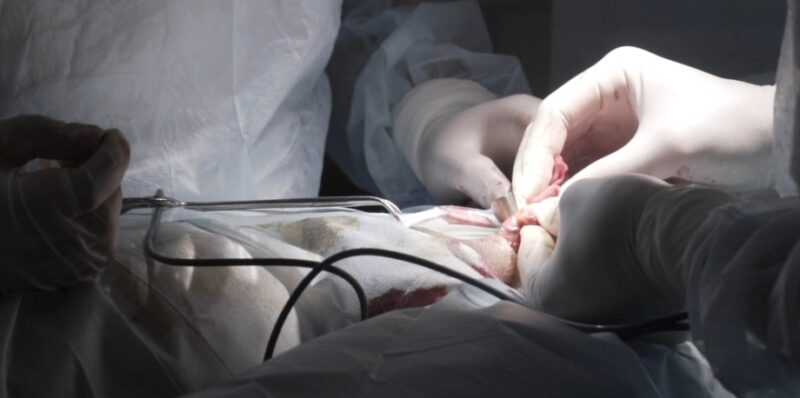



Performing scrotoplasty — i.e., surgery of the scrotum — can have several motives and is either carried out to remove excess skin of the scrotum (called scrotal reduction), or to repair, reshape, or create a scrotum. Scrotoplasty is also known as oscheoplasty.
 eBook | Click for details
The procedure can be about removing or adjusting excessive sagging or enlarged skin that spans the space between the penis’ shaft and the scrotum, the part of the male anatomy known as the penoscrotal webbing.
Mind that dissatisfaction with the appearance of the scrotum can significantly affect a man’s self-esteem and sexual confidence and can lead to severe psychological distress.
Therefore, the scrotoplasty procedure can also be performed out of esthetic motives, for instance to raise and esthetically rejuvenate the testicles, which is known as scrotal lifting or testicle lifting, but should not be confused with Testicle Lifting Exercises.
On the other hand, surgery may simply be necessary (or an option) when the scrotum or testicles in some way cause pain or in other ways interfere with having pleasant sexual intercourse.
Another reason for scrotoplasty can be gender-affirmation, that is, in this particular case to create male genitals as part of a female-to-male transition, meaning that apart from creating a penis (a surgical procedure known as phalloplasty), scrotoplasty can be an additional surgery to add testicular implants.