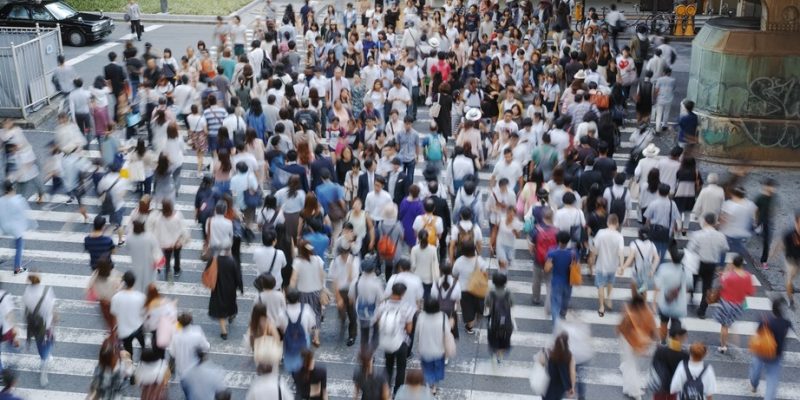


Our identity is based on our memory. For instance, remembering who my parents are, what my country is, my religion, my profession (and what is needed to do it), how to drive a car, and how to use a language, all define “what I can,” “what I do,” and — “who I am.”
 eBook | Click for details
When we lose our memory, we subsequently lose all our abilities and with that — our identity. We also lose both the concept and conception of a defined and definitive “I” existing in the world.
People with Alzheimer disease are excellent proof of that: we tend to say that such a person “isn’t him or herself any longer.” If, for instance, our mother suffers from Alzheimer, we would even say that “we’ve lost our mother,” and we’d go through a process of mourning.
Infants are another interesting phenomenon of what I’d like to call “de-identified creatures.” There’s hardly any better example of the fact that an identity is build, constructed, say — formed due to what we learn, acquire, and appropriate, which actually means — what we “save onto our cerebral hard-drive for later use.”
Understanding the above, that is — that identity=memory (inherited genetics and so-called instincts included) we can come to better insight in what the quest for spiritual enlightenment or self-realization really means.
In this respect, it’s often said that enlightenment (or self-realization) is “the disappearance of the Ego,” “the loss of an ‘I’ or identity,” and becoming “one with all and everything.”
eBook | Click for details
That would seem that I compare an enlightened-one to an infant or even to someone with Alzheimer, and in fact, that’s not far from the truth. With regard to this we might remember Jesus’ famous words in Matthew 18-3: “Truly I tell you, unless you change and become like little children, you will never enter the kingdom of heaven.”
Nevertheless, it would be ridiculous to take things as literally as stated. We just need certain parallels and aphorisms to point to things which are very hard — if not impossible — to definitively explain with words.
Now, self-realization is the realization that our identity is based on memory (on stocked knowledge). That our identity is fluid. That it can change, and changes. That “what we essentially are” is in fact a kind of tabula rasa, the blank in scrabble, and the joker in the card game.
Understanding this deeply, means that we become free, free from our memory (and thereby — our identity) just simply because the truth “sets us free!” This insight can come gradually, or instantly, looked-for, or spontaneously — there are really no recipes to that.
But afterwards — so much is true — we “will never be the same again.”