
Most people know the feeling of getting up from the massage table after a good session. The shoulders sit a little lower, the breath has slowed down, and the jaw has finally let go. Then daily life returns: the commute, the desk, a few short nights. By the end of the week, much of the old tension seems to have found its way back.
This doesn’t mean the massage didn’t work. Studies on massage therapy show real changes in pain, mood, and stress levels, but the body also keeps adapting to whatever it does most often. One hour on the table has to compete with all the other hours of the week.
The good news is that clients can take part of the session home with them. Across traditional wellness systems in Thailand, India, and Japan, bodywork has often been accompanied by everyday Self-Care practices such as breathing exercises, stretching, herbal baths, and Self-Massage. These practices offer simple ways to continue caring for the body between treatments.
Breathing as You Did on the Table
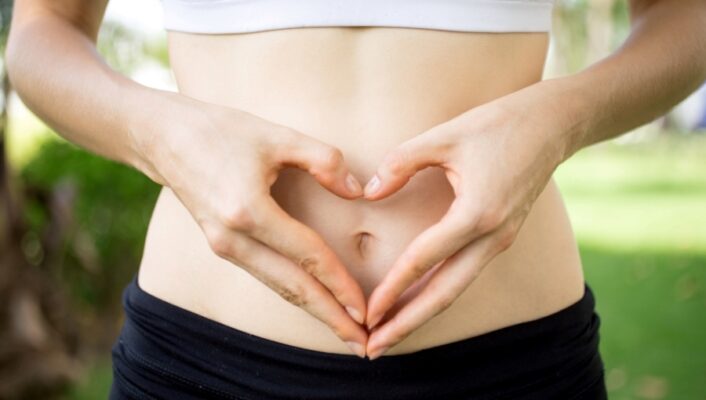
When a client relaxes during a massage, the first thing that changes is usually the breath. It becomes slower and deeper, and it moves from the upper chest down into the belly. This is something that can be practiced at home in just a few minutes a day.
Modern research supports what yogis have taught for centuries with Pranayama. Slow breathing, at around six breaths per minute, is associated with a calmer nervous system and lower levels of anxiety. A study from Stanford University found that just five minutes a day of breathing with long, slow exhalations improved mood and reduced physiological arousal more effectively than mindfulness meditation over the study period.
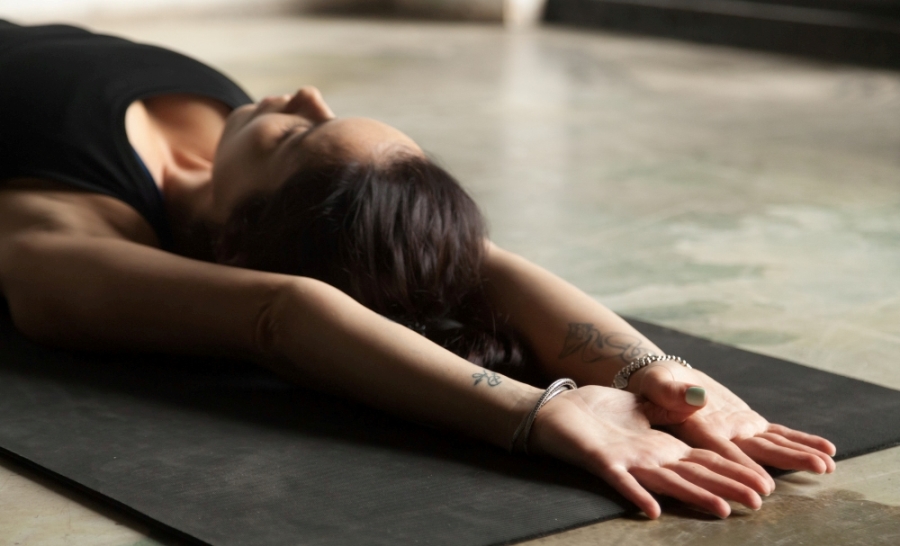
A simple way to start is to lie on your back with your knees bent. Breathe in through the nose for a count of four, and breathe out slowly through the mouth for a count of six to eight. Continue for about five minutes, preferably before going to sleep. If your therapist noticed that you hold tension in a particular area, rest a hand there and let it rise and fall with the breath.
Gentle Stretching
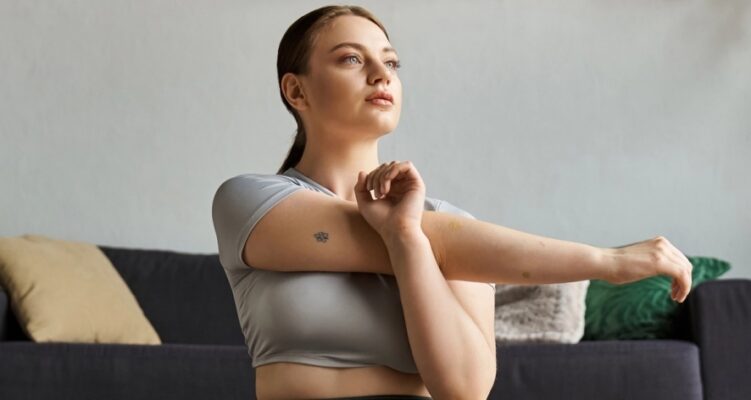
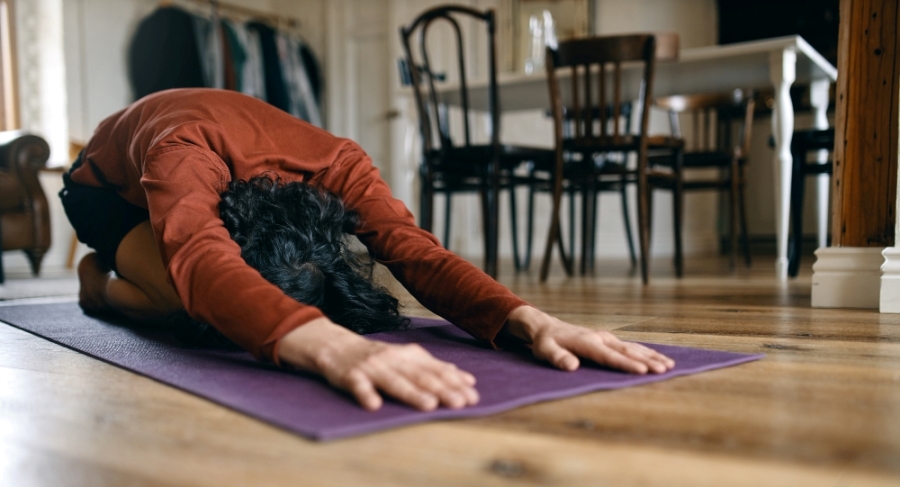
After a massage, muscles and connective tissue often feel softer, and joints move more freely. Gentle stretching helps to maintain that range of motion. Regular stretching improves flexibility over time, and short, comfortable holds are enough for most people.
The key word here is gentle. Stretching into pain makes the muscles tighten up to protect themselves, which is the opposite of what bodywork aims for. Hold each stretch for about 20 to 30 seconds while breathing slowly, and focus on the two or three areas your therapist worked on most, such as the neck, the hips, or the calves. A few minutes in the morning and a few in the evening are more useful than one long session a week. Traditional exercise systems such as Reusi Dat Ton, the Thai “hermit’s exercises,” were designed with exactly this daily rhythm in mind.
It’s also worth asking your therapist to show you one or two stretches that suit your body. Most are happy to do so.
Warmth, Self-Massage, and Rest
Some of the most effective Self-Care practices are also the simplest ones.
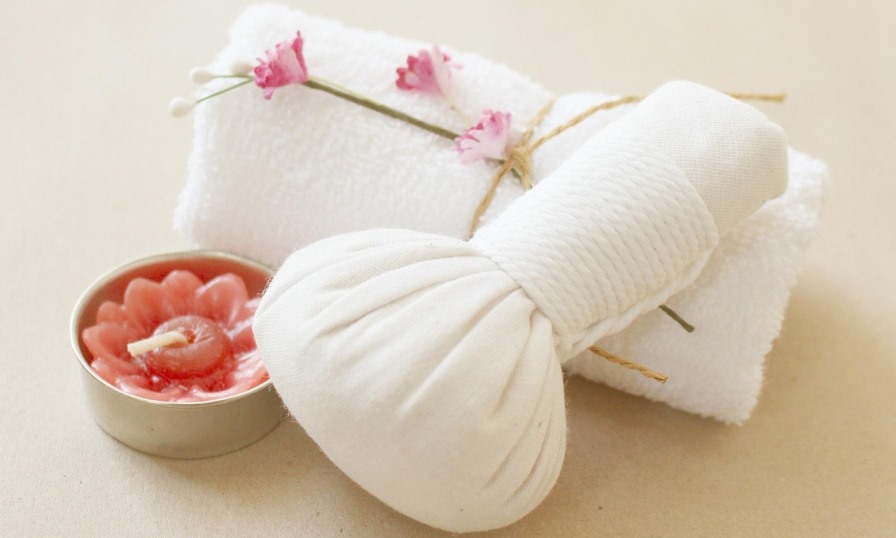
Warmth increases blood flow and helps muscles relax. Research suggests that moist heat may help reduce muscle soreness after physical effort. At home, this can be as simple as a warm bath, a damp heat pack, or a traditional herbal compress. Fifteen to twenty minutes is plenty.
Self-Massage will never replace a skilled therapist, but it can help maintain some of the effects of a session. Using your hands, a massage ball, or a foam roller, work slowly over the larger muscles, breathe, and avoid pressing directly on bones, joints, or the spine. Research on foam rolling shows small but meaningful reductions in muscle pain after exercise.
Finally, there is sleep. Poor sleep and pain feed each other, and research suggests that a bad night predicts next-day pain more strongly than the other way around. Protecting your sleep may well be the most underrated thing a massage client can do.
PEMF Mats: From European Clinics to the Home
A more recent addition to home Self-Care is Pulsed Electromagnetic Field therapy, or PEMF. A PEMF mat sends gentle, pulsing magnetic fields through the body while you simply lie on it. There is no heat and no electrodes, and most people feel nothing at all. This makes it quite different from a heating pad or a TENS device.
PEMF isn’t new. Doctors in the United States have used it since the 1970s to help fractures that wouldn’t heal. In countries such as Germany, Switzerland, and Austria, it became a common part of physical therapy and rehabilitation clinics. As the devices became smaller and suitable for home use, they gradually found their way into private homes.
So what does it offer for the kind of tension that brings people to the massage table? Reviews of the research suggest that PEMF may help reduce certain types of musculoskeletal pain, particularly in people with lower back pain and osteoarthritis. However, results vary depending on the condition, device, and treatment protocol, and researchers agree that further studies are needed. In one trial with lower back pain patients, adding PEMF to an exercise programme reduced pain and improved function more than exercise alone.
For massage clients, a PEMF session can become a quiet daily ritual: fifteen to twenty minutes lying down, combined with the slow breathing described above. Those considering a device are best served by one with transparent settings and a clear research history. Systems such as QRS PEMF systems, developed in Europe, belong to a category of PEMF technology with a history of clinical research and use.
As with massage itself, there are precautions and contraindications. PEMF is not suitable for everyone, including some people who are pregnant or have a pacemaker or other implanted electronic devices. Anyone with these circumstances should consult a healthcare professional before considering PEMF therapy.
Bringing It Back to the Table
Perhaps the most useful thing you can do is tell your therapist what you tried at home and how it felt. If a stretch helped your neck, or a breathing exercise improved your sleep, they can build on that in the next session. If something made you sore, they can help you adjust it.
Endnote
Bodywork works best as an ongoing conversation between the session and the rest of your life. Slow breathing, gentle stretching, warmth, Self-Massage, good sleep, and, for some, a PEMF mat can all help the body remember what it learned on the table. You don’t need to do everything. A few quiet minutes a day, done consistently, are enough to keep that conversation going until your next appointment.
This article is for general information only and does not replace professional medical advice.