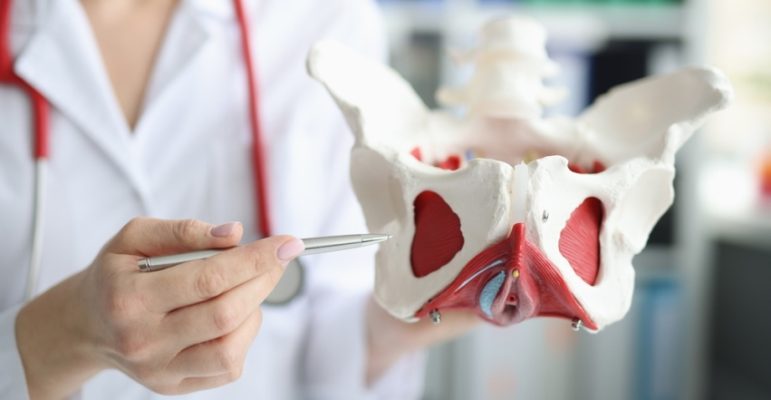



Each person is thought to have a Body Map, which refers to the mental representation of the size, shape, function, and mechanics of their body parts. In addition, this Body Map changes over time due to shifts in emotional and sensory experiences, as well as the natural changes that occur in the body throughout one’s lifetime.
 eBook
eBook
It’s interesting to consider that a person’s Body Map doesn’t need to — and often never entirely does — correspond with the objective, physical reality of their body. It’s rather an idea, a feel, a “translated” experience as a result of the various movements and sensory information of one’s body, both on an internal as an external level. In short, there may be a mismatch between one’s mental Body Map and one’s actual, concrete body.
Within some circles, it’s thought that part of what makes transgender people transgender or non-binary people non-binary is that they may have a certain innate or inborn Body Map that doesn’t correspond with their actual body. In fact, it makes them feel that an important part of their body does not belong to them, or is strange to them. It also means that they will tend to behave as if the Body Map is the real truth, and not the form/shape of their body.
The above translates into two psychological phenomena; a person may feel that a certain body part is lacking (for instance a penis) and should be there, or a person may feel that a certain body part shouldn’t be there at all (for instance a vagina). Perhaps needless to say that such an experience (either the one or the other) can be highly distressing and may lead to so-called Gender Dysphoria. As such, hormonal, non-surgical and/or surgical interventions would be a useful way of reducing or even removing their distress.
eBook
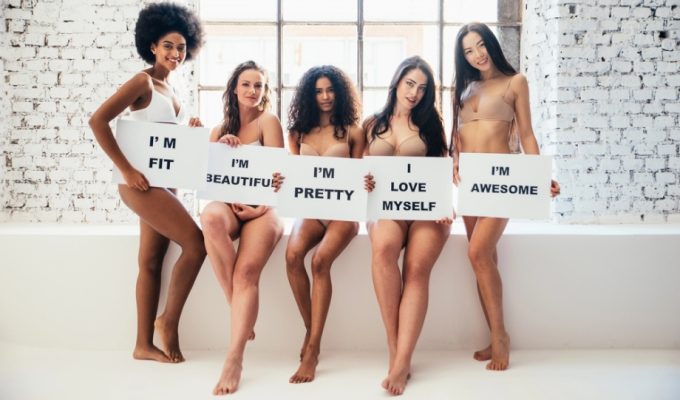
The term Body Image is somewhat related to the term Body Map, but is rather a moral judgment of one’s own body instead of an idea about the perceived or felt form and functionality of one’s body. Body Image refers to how people view themselves in terms of aesthetics or sexual attractiveness and involves their (positive, neutral, or negative) approach or attitude towards their own body, which is typically defined or influenced by a mix of social, cultural, psychological, and biological factors — including unrealistic beauty standards, media influence, peer pressure, family attitudes, trauma, and mental health conditions.
When someone has a negative Body Image, they may feel dissatisfied, self‑conscious, unconfident, ashamed, and/or distressed, often believing that other people are more attractive. This typically leads to increasing emotional and mental difficulties, which may eventually result in issues such as body dysmorphia, eating disorders, social isolation, or other mental illnesses.
Just as with an individual who perceives incongruence between their actual body and their personal Body Map, a negative Body Image may lead a person to focus intensely on altering their physical appearance in order to achieve a more positive Body Image. This may involve actions such as dieting, grooming, physical exercise, non‑surgical masking interventions, or undergoing cosmetic surgery.
Maxxing practices, particularly looksmaxxing activities, are typically the result of a negative Body Image. Hence, the rationale and goal behind looksmaxxing is to pursue maximal changes to one’s body.
eBook
An important difference between Body Map incongruence and a negative Body Image is that it’s thought that a negative Body Image can be resolved by cultivating another attitude, one of Body Positivity through which a person learns to celebrate and appreciate their body as for how it is and by understanding that one’s physical appearance doesn’t reflect one’s character or worth as a person.
However, resolving Body Map incongruence is more complex. On one hand, individuals can learn to develop a more accurate mental Body Map through self‑observation, self‑inquiry, and somatic exercises, which typically results in perceiving their body more in line with objective reality and using it more efficiently.
On the other hand, part of one’s mental Body Map may be unalterable — that is, innate or inborn — which, for instance in the case of transgender people, may manifest as a deeply felt experience and certainty that the body is a sex other than its physical or biological reality.