

I decided to dedicate a special post to what I call “insect explosions” because suddenly occurring insect swarms are a very particular and important phenomenon of daily life in the rainforest of French Guiana.
 eBook | Click for details
Now, although you find a myriad of insects and other animals in the jungle, it’s still a very balanced environment. Nothing is in excess, and one type of animal keeps another type of animal in check.
For instance, you’d expect a lot of cockroaches in the jungle, but encounters are relatively rare, at least if you compare them with many cities around the globe. The same counts for mosquitos. Strangely enough, you’d find more mosquito issues in cities than in the forest.
Having said that, you would now and again experience sudden surges of some type of insect, which could be any, such as termites, ants, flies, wasps, or mosquitos, to give some examples.
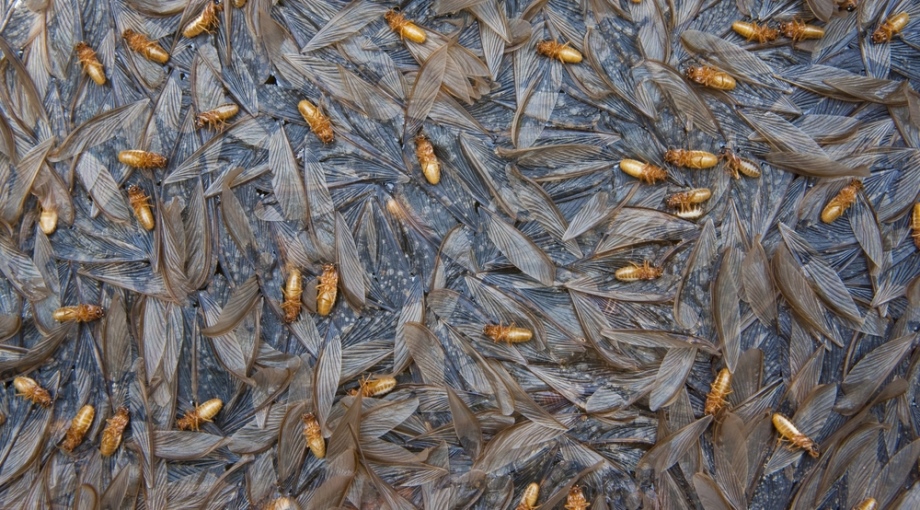
Sometimes, it can be explained, for instance after a period of drought and the first rains that follow you would see an explosion of certain types of insects, such as termites. To stay with termites, I have seen the ground open up nearby the hut, a big hole of about fifty centimeters in diameter, and a column of several meters high with millions of flying termites that “explode” out of the Earth.
eBook | Click for details
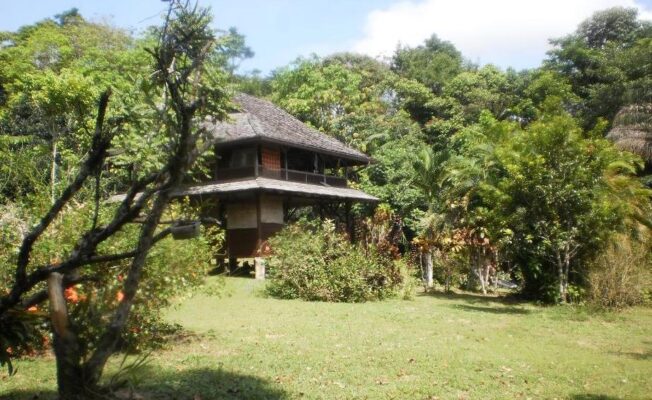
The result is that you need to leave your dwellings for a day or two (especially because I lived in an open-air hut) because literally everything will be covered up and infested with termites, dead and alive, and the countless wings that have fallen off. It takes weeks to thoroughly clean up the mess.
At other times, you have no clue what triggered a certain surge. For instance, you have the red leafcutter ants that can ravish a big tree of fifteen meters high in just one night. They come, climb the tree, and carry all the leaves with them to their nest. I saw it happening with a guava tree. Unfortunately, they often do this in the night, so it’s only the next morning that you are confronted with their destructive activity, and hence too late to try to do something about it.
It’s also wise to be prepared for encounters with huge volumes of insects during your walks or hikes in the jungle. You have no idea why they’re exactly at that location, but at times you innocently pass a specific area and you may find yourself suddenly surrounded (and attacked) by mosquitos, sandflies, or wasps.
Another absurd phenomenon is the attack of so-called “vacuum cleaner ants,” also known as legionary ants. These relatively large, black ants march the grounds in various very wide columns, millions of them, and they march through your garden, your hut, over your furniture, ceiling, and roof, and so on. They are unstoppable, and like with the termites, you will need to leave your hut and terrain for a couple of days.
eBook | Click for details
They are called “vacuum cleaner ants” because they eat all the crumbs, insects, and other debris in your hut, and after they’ve passed through, the hut is “clean and shining.” It happened once when I lived there, and we stayed two nights in the hut of one of the families who was living in the community.
In a more general sense, you would have sudden attacks of large numbers of some species of insects, such as mosquitos, certain types of beetles, or fireflies (lightning bugs), typically during the beginning of the night. Sometimes, these were so intense that you would “call it a night” and crawl under your mosquito net.
Well, at any rate, the most trying thing about the Amazonian rainforest was (at least for me) the numerous insects — both in amounts and variants of species. Specifically, it was the energy that goes into the fight against their attacks, the hurt they can cause, and the risk of many types of diseases they can transfer.
After I finally left French Guiana, not being bothered by so many insects on a daily basis was a real relief.